Whatever Happened To Japan’s Emu-chan?

Emus take pride of place in the Australian Coat of Arms alongside the kangaroos upon which this site has a focus. And Emu-chan played a crucial role in raising spirits in Japan during the darkest days of the Covid-19 pandemic before suddenly and mysteriously disappearing.

Sabaku, the pseudonym used by a Japanese woman working in central Tokyo and “living in the mountains about an hour’s drive from the city” according to Bunshun Online, caused a national sensation with her YouTube channel Live Together With Emu up until late 2023.

Videos told the tale of Sabaku’s life with Emu-chan, which she had raised from a hatchling, delighting people with footage of their lives together, including feeding, cleaning and sometimes funny and silly episodes.

Videos regularly achieved from 200,000 to 700,000 views, with one hitting almost 2 million, and the channel at about 170,000 subscribers at its peak in early 2023.

Sabuku even released a photo collection of her life with the bird, and the couple seemed to have a ubiquitous presence in Japan.

With these figures, the channel and other enterprises would have been a moderately lucrative enterprise for Sabaku, possibly going a long way toward the cost of upkeep for her exotic pet.

But, having seemingly been everywhere all at once, news about the bird and the “office lady” just stopped. Sabaku had reported that Emu had fallen ill in late 2022, but resumed posting.

She took a break in the blistering hot summer of 2023, citing the heat as a factor in reducing her social presence.

But, by the end of 2023, she was no longer uploading videos. She locked her once flourishing Twitter account, made no other social media posts and gave no indication of what is happening.

Fan speculation has been rife, suggesting that Emu-chan had passed away, been re-located, or Sabaku had resumed working in her Tokyo office instead of being at home.

Public video production and frequent posting have basically stopped since November 2023.

No clear indication of what has happened to the emu or her owner has ever been given, though her blog, Twitter, Instagram, and YouTube accounts remain online if not updated.

Some people say the videos stopped to allow Sabaku to take closer care of Emu-chan and avoid the stress of filming, others surmise that the bird is either ill or deceased, and there are also suggestions that the owner just got burned out.


But nobody knows for sure.


Sabaku made for a wonderful tale being the young female owner of a huge flightless bird living together outside of Tokyo, but she is only one of many individual Japanese to have an emu.


Unlike Australia, where ownership of emus is permitted but highly regulated, Japan requires no special rules to keep one of the birds. People can buy a chick for 100,000 yen to 200,000 yen, and a fully grown bird will eat about 6 kg of food per day. Annual upkeep for an emu, including veterinary costs, usually runs into several hundred thousand yen. Emus need lots of space, which doesn’t make them an ideal pet in cramped Japan. And they need to be fenced in, which is also costly. Emus can live up to 50 years. Buying one is not cheap, and keeping a bird is even pricier.

Japan also has a commercial emu industry.

Emu farms in places such as Hokkaido, Fukuoka Prefecture, and Saga Prefecture produce emu oil, meat, eggs, sausages, leather, and other products.
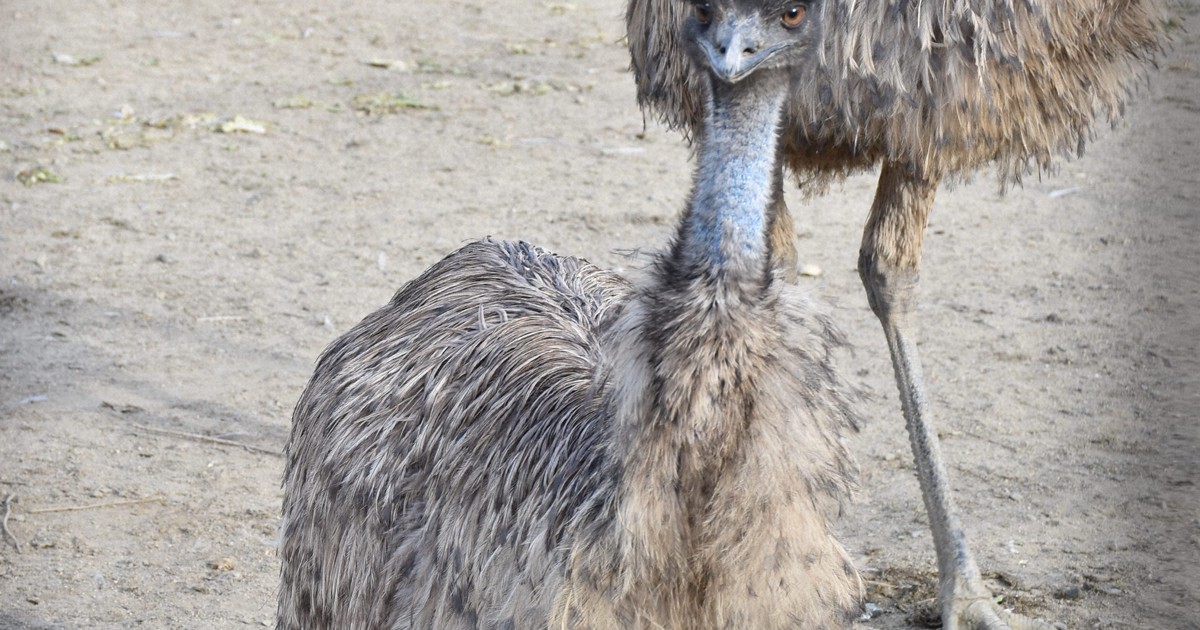
Some of these products are sold at retail outlets.

It’s hardly huge business, but commercial emu farming exists in Japan.


It’s not all good news about emus in Japan, though. In recent years, there have been numerous stories about emu escapes and strife tracking down the huge birds as they roam about the countryside.

There have been at least four major emu escapes in Japan since 2021, including one case where more than 20 of the birds broke free in Kumamoto Prefecture in 2021. Fortunately, nobody has been injured in these cases, but a privately owned emu in Niigata Prefecture escaped and died of shock after recapture in 2024.

Private emu-keeping remains a gray zone — legally permissible, but with little oversight beyond generic duty-of-care. This exposes owners, animals, and communities to risk such as escapes, stress or death, and ecological disturbance, especially given emus’ size and speed.
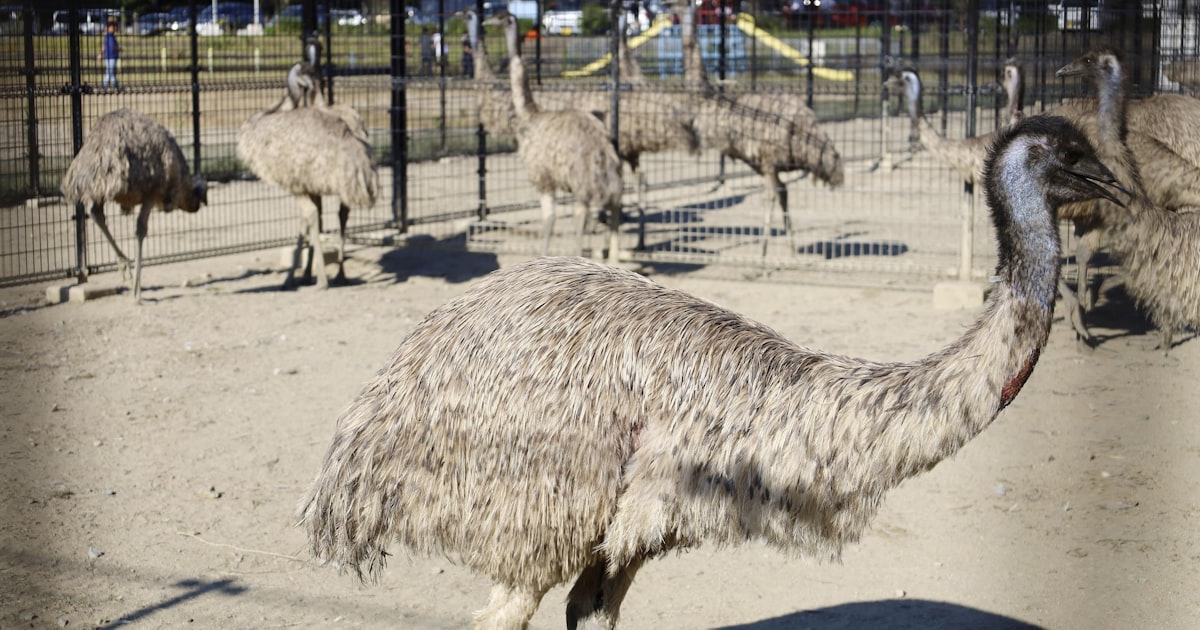
Escapes have raised biosecurity concerns, particularly regarding the spread of avian flu.
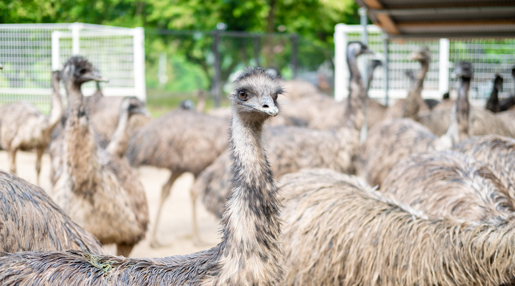
Even if Emu-chan spearheading a drive for keeping emus as pets seems attractive, from a welfare and ethical standpoint, the birds are ill-suited for small-scale private keeping. The growing history of escapes and deaths signals that many owners underestimate how demanding proper care is.

Given that there have been reports of emu escapes as recently as September 2025, panics and deaths in Fukuoka Prefecture in February 2024, Niigata Prefecture in April 2024, Ehime Prefecture the following month and again in Kochi Prefecture in January 2025, the appeal of emu ownership may have cooled.
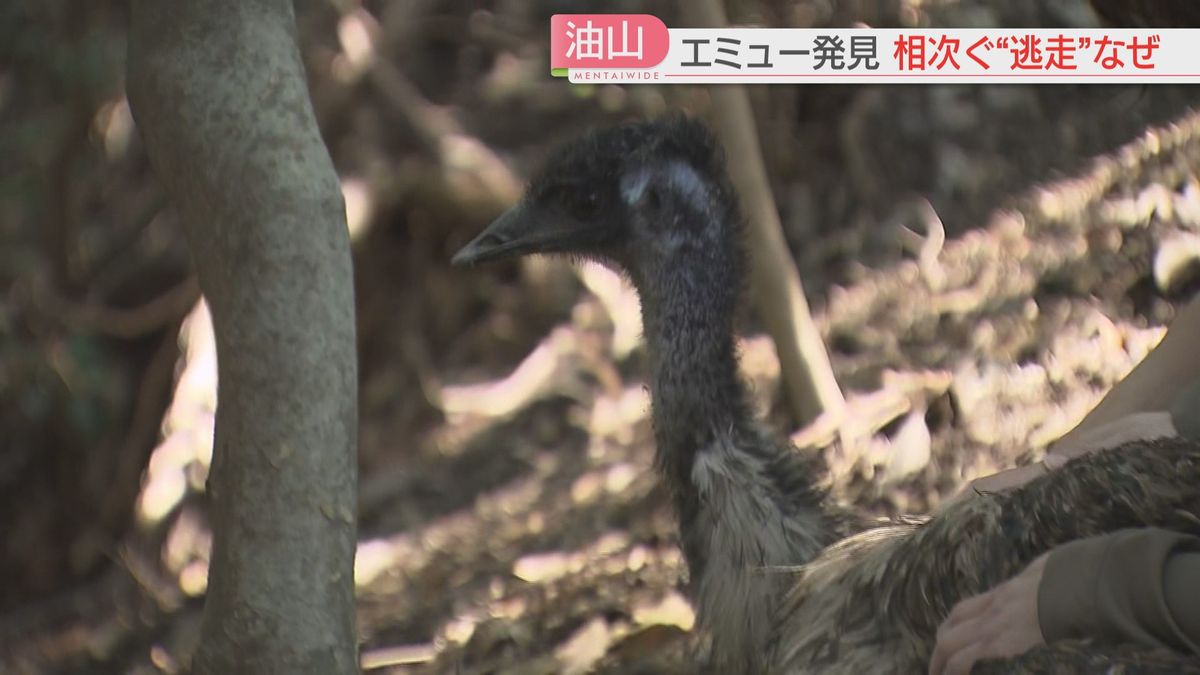
Given the wave of negative press and public concern over emu escapes, deaths, and the welfare risks, it’s plausible that Sabaku faced increasing practical and social obstacles — risk of escape, stress on the emu, moral concerns, potential regulatory scrutiny, and the burden of care. For the time being, though, the fate of Sabaku and Emu-chan remains a mystery.
The last Live Together With Emu video from November 2023 (which is basically an ad, but ends with a slightly ominous photo that I may be reading too much into…)