Why Do Japanese Baseball Teams Train in Australia?

なぜ日本のプロ野球チームはオーストラリアでキャンプを行うのか?
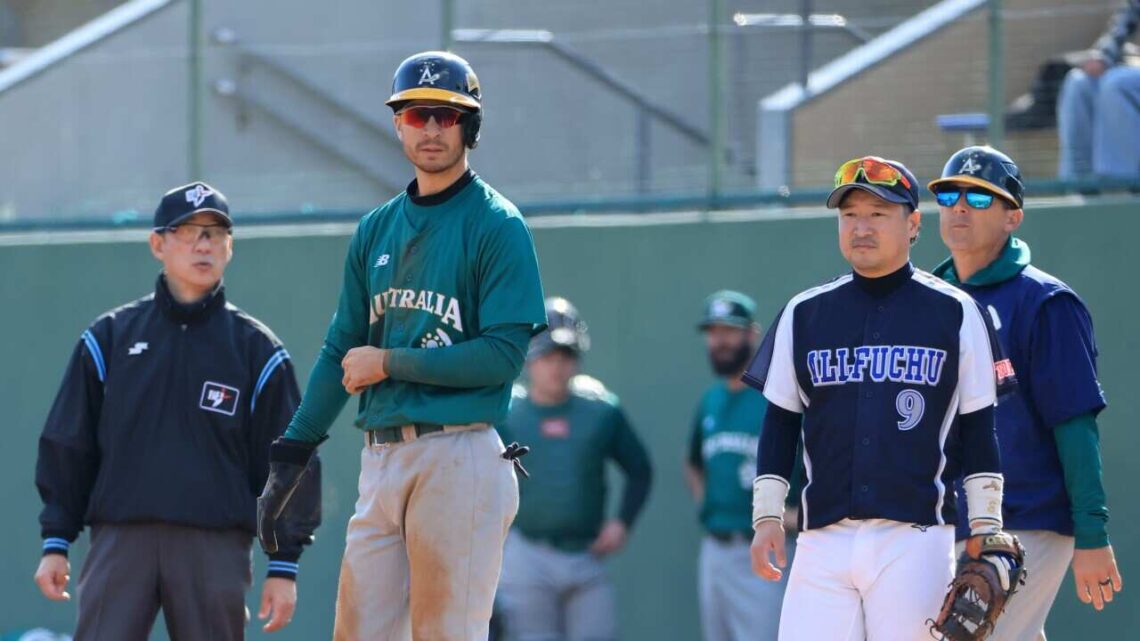
Every February and March, Japanese professional baseball teams head south instead of north. Why? The answer isn’t simply sunshine. Behind Australia’s growing role in Japanese baseball lies a story of friendship, trust and a shared love of the game.

毎年2月から3月にかけて、日本のプロ野球チームは北ではなく南へ向かいます。その理由は、暖かい気候だけではありません。オーストラリアでのキャンプには、野球を通じて育まれた日豪の友情と信頼の物語があります。


More Than Sunshine

暖かさだけではない

When winter grips Japan, Australia is enjoying late summer.

That makes it an ideal place for pre-season training.

But sunshine alone doesn’t explain why Japanese teams keep returning.

They come because Australia offers first-class facilities, quality opposition and communities that welcome them year after year.

暖かさだけではない

日本が冬を迎える頃、オーストラリアは夏の終わりです。

そのため、春季キャンプには最適な環境となります。

しかし、日本の球団が何度も訪れる理由は気候だけではありません。

充実した施設、実戦相手、そして温かく迎えてくれる地域の人々がいるからです。


Building Baseball Friendships

野球がつないだ友情

Training camps create more than fit players.

They create friendships.

Local volunteers, junior players and baseball clubs often help host Japanese teams.

Children watch professional players train only metres away, while visiting athletes experience everyday Aussie hospitality.

野球がつないだ友情

キャンプで育まれるのは選手の体力だけではありません。

人と人との交流も生まれます。

地域の野球クラブやボランティアが日本のチームを支え、子どもたちは目の前でプロ選手の練習を見ることができます。

訪れた選手たちは、オージーならではの温かい歓迎に触れるのです。


Learning From Each Other

お互いに学び合う

Australian baseball has long admired Japan’s discipline and technical excellence.

Japanese teams, in turn, appreciate Australia’s relaxed training environment and competitive local talent.

The exchange benefits both countries.

Knowledge travels in both directions.

お互いに学び合う

オーストラリアの野球界は、日本の高い技術力や緻密な練習方法から多くを学んできました。

一方、日本のチームも、開放的な練習環境や実戦経験豊富なオージー選手との交流を高く評価しています。

学びは、一方通行ではありません。


A Growing Partnership

広がる野球交流

Australia is no longer simply a convenient place to train.

It has become an important partner in Japanese baseball’s international outlook.

Exhibition games, coaching exchanges and youth development programmes continue to strengthen ties between the two baseball communities.

広がる野球交流

オーストラリアは、単なるキャンプ地ではなくなりました。

今では、日本野球の国際的な活動を支える大切なパートナーとなっています。

親善試合や指導者交流、ジュニア育成などを通じて、両国のつながりはさらに深まっています。


A Win Beyond the Scoreboard

スコアでは測れない勝利

Fans usually remember the season that follows spring training.

Local communities remember something different.

They remember the conversations, the smiles, the school visits and the friendships.

Those moments last far longer than any exhibition game.

スコアでは測れない勝利

ファンはキャンプ後のシーズン成績を覚えているかもしれません。

しかし、地域の人々の記憶に残るのは別のことです。

選手との会話、笑顔、学校訪問、そして新しい友情。

それらは試合結果よりも長く心に残ります。


More Than Baseball

野球を超えた物語

The relationship between Japanese baseball and Australia reflects the broader friendship between the two countries.

Built slowly.

Strengthened through trust.

Sustained by people who simply enjoy working together.

Perhaps that is why Australian training camps have become such a valued tradition for Japanese baseball.

野球を超えた物語

日本野球とオーストラリアの交流は、そのまま日豪関係を映し出しています。

長い時間をかけて築かれ、

信頼によって育まれ、

人と人との交流によって続いてきました。

だからこそ、オーストラリアでのキャンプは、日本野球にとって大切な伝統となっているのです。


Did You Know?

Several Nippon Professional Baseball clubs have held spring training camps or exhibition programmes in Australia, helping introduce Japanese baseball to new generations of Aussie fans.

豆知識

これまで複数の日本プロ野球球団がオーストラリアで春季キャンプや親善試合を実施し、多くのオージーが日本野球に親しむきっかけとなっています。


Sources
Cop A Gander At These Rippers Too...

  • | |

    Poles Apart! How A Japanese-Aussie Created An Apparently Eastern European Monicker

    なぜオーストラリアに「日本人由来のポーランド風の姓」があるのでしょうか? A very Australian mystery オーストラリアにある不思議な姓 Dicinoski sounds Polish. In fact, the surname is so unusual that it appears to belong to just one Australian family. And many of its members thought they came from Poland, too. Yet its origins lie not in Europe, but in Japan. And with a circus performer who became one of the earliest recorded Japanese settlers in Australia. 「ディキノスキー」と聞けば、ポーランド系の姓だと思うのが自然でしょう。ところが、この珍しい姓はオーストラリアの一つの一族にしか見られません。そのルーツはヨーロッパではなく日本。そして、その始まりはサーカス芸人として渡豪した日本人でした。 Meet Rikinosuke 始まりは力之助 His name was Sakuragawa Rikinosuke (桜川力之助). He was a Japanese acrobat who travelled to Australia with other performers in the early 1870s. Australian and Japanese sources differ slightly over the precise arrival date, but he was in Australia by 1873 and is recognised…

  • 32年間豪全体の注目を浴びた事件でディンゴが犯人と確定した

     過剰報道によってオーストラリア全体が32年間著しく注目を浴びたアザリア・チェンバレン失踪事件がようやく12日ダーウィンの検視法廷で9週間の赤ちゃんだったアザリアちゃんが1980年で野犬の一種であるディンゴにウルル周辺で連れ去られ、死亡したと結論付けた。  1980年当時、アザリア・チェンバレンの母であるリンディ・チェンバレン・クレートン氏は、「娘がディンゴに取られて」といい、赤ちゃんが失踪し以降死体も見つからなかった。当時、ディンゴが人間の赤ちゃんを食べることが信じられかったからチェンバレン・クレートン氏が殺したじゃないかとうわさされた。マスコミによりそのうわさが広がり、全国的の話題となった。ジョークなり、過剰報道となり、結局チェンバレン・クレートン氏が殺人罪に有罪判決となったが1987年に新しい証拠を見つかり釈放され、結局無罪となった。が、娘の死亡原因が「不明」であったため、長年ディンゴに取られたことの検証として死亡証明証の内容にそのことを示すように今回の裁判に乗り出した。  この事件の元にジョークや話題の種だけでなく、本・舞台・オペラ・レコードそしてメリル・ストリープがチェンバレン・クレートン氏役でハリウッド映画の題材まで課題となった。  オーストラリア文化を分かるためにこの事件のことを知ることが絶対必要なのだ! 「ディンゴがアザリアちゃんを連れ去り、殺害」 32年前の豪乳児失踪事件、「野犬が連れ去った」と結論 リンディ・チェンバレン Azaria Chamberlain Disappearance (English) 火曜日の判決報道 メリル・ストリープがリンディ・チェンバレン・クレートン氏役を演じた「Evil Angels」(1988年作)の予告編

  • | | |

    史上最高カンガルー・ケーキは日本人女性が作った!

     オーストラリア政府観光局であるTourism Australiaは、先週フェースブックで300万人の「いいね」を記念として世界最高(考えRoo主観的な意見、、、)なカンガルー・ケーキ製作をシドニーのPlanet Cake社に委託し、実際にそのデザイン・作成などを行ったのは日本人女性だった。  Naoko Iikura氏は同社のシニア・ケーキ・デコレーたーであり、巨大なカンガルー・ケーキを作成を担当した。  このケーキはなんと等身大より大きく、高さ2メートルもあり、ものすごく細かく作られて、遠くから見られたら本物そっくりだ。  同社ウェブサイトによるとNaoko Iikura氏は約8年前日本からオーストラリアに渡って約3年前にヘッドハンティングされた。Naoko Iikura氏の仕事が速くて細かいと、好評だ。創作を見れば、その理由が一目見れば分かる。  偏見はあることを認めるが、この信じられないほど素晴らしいカンガルー・ケーキはNaoko Iikura氏が天才的だと言っても過言ではない。 Planet Cake Kangaroo Gallery

  • | |

    Did Japan Inspire Australia to Choose National Living Treasures?

    日本の「人間国宝」はオーストラリアの「リビング・トレジャーズ」に影響を与えたのか? Australia’s National Living Treasures celebrate remarkable Australians. Japan’s Living National Treasures protect traditional masters. The two honours are different—but they may be connected by an idea that travelled across the Pacific. オーストラリアの「ナショナル・リビング・トレジャーズ」は優れた人物をたたえる制度です。一方、日本の「人間国宝」は伝統技術の継承者を守る制度です。両者は異なりますが、その背景には海を越えて受け継がれた一つの考え方がありました。 Japan Had the Idea First 最初に制度を作ったのは日本 After the Second World War, Japan faced an urgent question. How could traditional arts survive in a rapidly modernising society? The answer was to recognise exceptional craftspeople and performers as Living National Treasures, helping preserve skills that might otherwise disappear. 最初に制度を作ったのは日本 戦後の日本は、急速な近代化の中で伝統文化をどう守るかという課題に直面しました。 そこで生まれたのが「人間国宝」の制度です。 卓越した技術を持つ職人や芸能家を顕彰し、その技を未来へ伝える仕組みとなりました。 Australia Took a Different Path オーストラリアは独自の形へ When Australia’s National Trust introduced its National Living Treasures in 1997, the goal was different. Instead of recognising only traditional artists,…

  • | |

    Monkeying Around With Shared Kobe Steel(e)s

    Of the many commonalities shared by Australia and Japan, perhaps one of the quirkier ones is that both countries are home to a Kobe Steele known for monkeying around. Australia’s Kobe Steele founded the Orangutan Foundation International Australia (OFI Australia), and was awarded the Medal of the Order of Australia in 2021 for her services to conservation and the environment. Japan’s Kobe Steel Ltd., meanwhile, monkeyed around in a far less noble way, falsifying inspection and quality data on steel, aluminium and copper products for years, affecting hundreds of customers and resulting in billions of yen in fines after causing one of Japan’s most significant industrial quality scandals in recent…