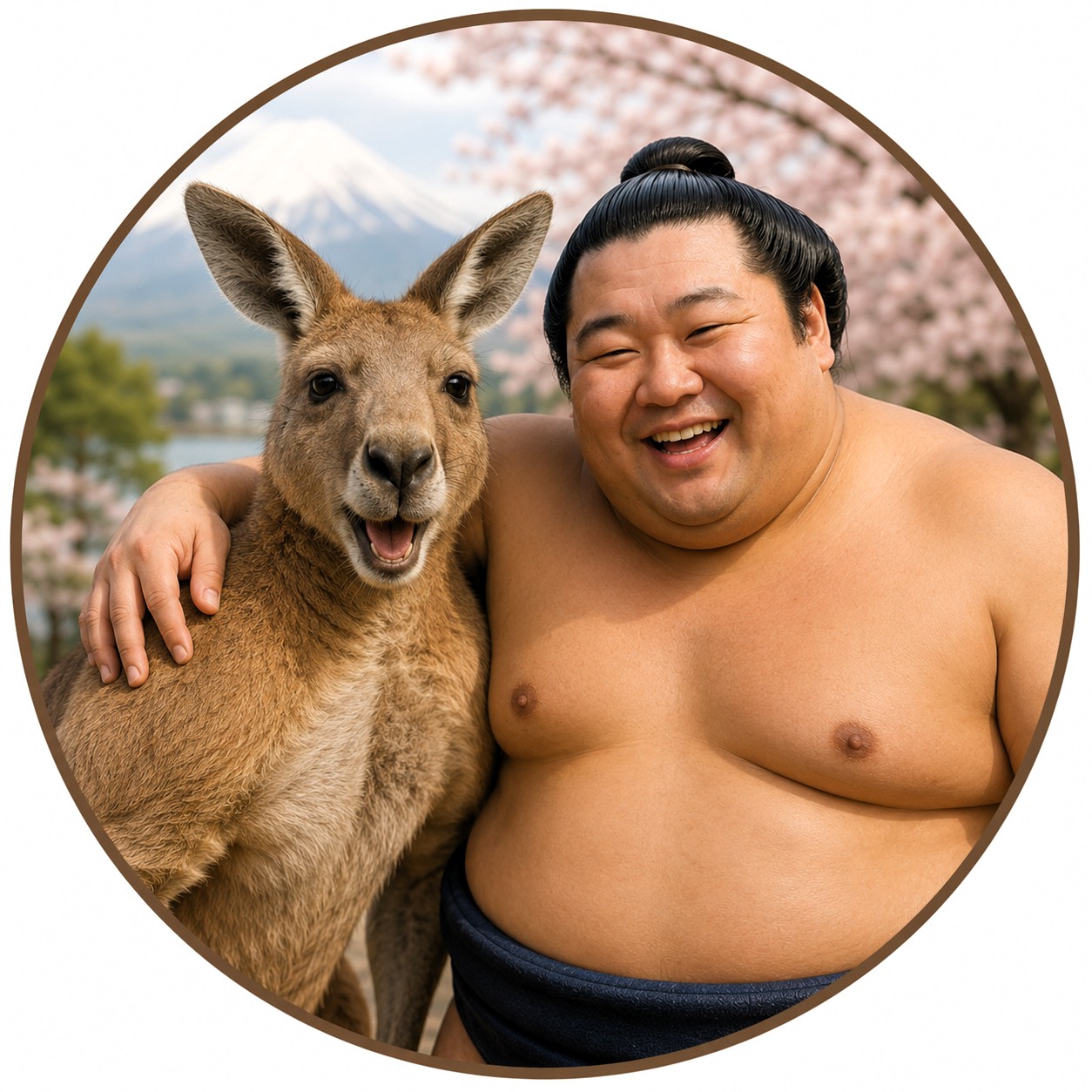
Why Hasn’t Australia Produced a Professional Sumo Wrestler?

なぜオーストラリアから大相撲力士は誕生していないのか?

Australia has produced Olympic wrestlers, world champions and elite athletes in almost every sport imaginable. And walking on any Aussie city street, you’d reckon there’s plenty of decent candidates for a sport demanding a massive girth. Yet one Japanese sport has remained out of reach. Why has no Australian ever competed in professional sumo?

オーストラリアは、オリンピック選手や世界チャンピオンなど数多くのトップアスリートを輩出してきました。しかし、日本の国技・大相撲だけは例外です。なぜ、オーストラリア出身の大相撲力士はいないのでしょうか。


A Sport Unlike Any Other

特別なスポーツ

Professional sumo is much more than a sport.

It is a centuries-old way of life, built around strict traditions, communal living and total dedication to a sumo stable.

Becoming a professional rikishi means embracing an entirely new culture.

特別なスポーツ

大相撲は単なるスポーツではありません。

何百年も受け継がれてきた伝統や共同生活、厳しい規律の中で成り立っています。

力士になるということは、新しい文化そのものを受け入れることでもあります。


The Door Is Narrow

狭き門

For many years, each professional sumo stable has generally been limited to recruiting just one foreign-born wrestler.

That rule means talented athletes from around the world compete for only a small number of opportunities.

Even outstanding competitors may never receive an invitation.

狭き門

大相撲では長年、各相撲部屋が受け入れられる外国出身力士は原則として一人とされています。

そのため、世界中の有望な選手が限られた枠を争っています。

実力があっても入門できるとは限りません。


Australia Does Have Sumo

オーストラリアにも相撲はある

Although Australia has never produced a professional rikishi, it has an active amateur sumo community.

Australian athletes regularly compete in national championships and international tournaments.

Some have even travelled to Japan to test themselves against the world’s best amateurs.

オーストラリアにも相撲はある

オーストラリアから大相撲力士は誕生していませんが、アマチュア相撲は着実に発展しています。

国内選手権や国際大会に出場する選手も増えています。

日本で開催される大会に挑戦するオージー選手もいます。


More Than Size

大きさだけではない

Many people assume success in sumo depends simply on being big.

Professional coaches disagree.

Balance, timing, explosive power, discipline and years of technical training matter just as much as body size.

That combination is difficult to master anywhere in the world.

大きさだけではない

相撲は体が大きければ勝てると思われがちです。

しかし、実際には違います。

体格だけでなく、バランス感覚、瞬発力、技術、そして長年の鍛錬が求められます。

世界中でも簡単に身につくものではありません。


Could Australia Produce One?

オーストラリア初の力士は誕生するのか?

The possibility remains.

Australia has talented wrestlers, judoka and rugby players with the physical attributes to compete.

As international interest in sumo grows, an Australian may one day decide to pursue the demanding life of a professional rikishi.

オーストラリア初の力士は誕生するのか?

可能性は十分にあります。

オーストラリアには、レスリングや柔道、ラグビーなどで鍛えられた優れた選手がいます。

世界で相撲人気が高まる中、いつの日かオージー初の力士が誕生するかもしれません。


An Unknown Nichigo Story

「知られざる日豪交流」の物語

Sometimes the most interesting stories are about what hasn’t happened.

Australia has embraced Japanese food, baseball, martial arts and culture.

Professional sumo remains one of the few frontiers yet to be crossed.

Perhaps that makes the first Australian rikishi one of the most anticipated Australia–Japan stories still waiting to be written.

「知られざる日豪交流」の物語

実現していないことにも、興味深い物語があります。

オーストラリアでは、日本食や野球、武道など多くの日本文化が親しまれています。

しかし、大相撲だけはまだ挑戦者を待っています。

最初のオージー力士の誕生は、未来の日豪交流を象徴する出来事になるかもしれません。


Did You Know?

Australia regularly sends competitors to international amateur sumo tournaments, and Australian women have also represented the country at world-level events. While no Australian has yet competed in professional ōzumō, the amateur sport continues to grow.

豆知識

オーストラリアは国際アマチュア相撲大会に選手を派遣しており、女子選手も世界大会で活躍しています。大相撲力士はまだ誕生していませんが、アマチュア相撲は着実に発展しています。

Sources

Cop A Gander At These Rippers Too...

  • Anti-Asian ‘Rage Ranga’ Pauline Hanson’s Soft Spot For Japan

    Populist politicians are on the ascendency across the globe. Japan is heading to the polls with Prime Minister Sanae Takaichi, who can probably be called a populist, tapping into strong anti-foreigner sentiment to give her Liberal Democratic Party its traditional grip on power. Joining demagogues like Trump, Farage, Le Pen, Wilders and Milei is Australia’s own “rage ranga” Pauline Hanson, whose political fortunes have taken an astonishing turn. Before going forward, a bit of disclosure: I despise the right-wing form of demagoguery spreading around the world, but lean toward populism on the opposite side of the political spectrum. I’m an angry, fearful old man. That makes me a prime populist…

  • |

    Australia Day賛否両論

    オーストラリア・デーだよ!1月26日は、ちょうど224年前この日にオーストラリアを(刑務用の)植民地とするイギリス人が今のシドニーの東部にあるボタニー・ベイに着いた。今、全国がその日を記念として、オーストラリア全体を祝う一日と位置付けている。まぁ、日本で言えば建国記念日見たいなもんだ。  しかし、みんなが喜ぶ訳でもない。  豪原住民にとってヨーロッパ系の人々がオーストラリアに来たことが自分たち国を失うことの始まりになり、多くの原住民にとってこの日が「侵略日」とする。  また、この日を機に「国家主義」と「愛国心」を区別つかない人がこの10数年増えているような気がする。オーストラリア・デーは当然「旗日」であり、この日に国旗は誇りを持ってはる人が多い。しかし、多くの人にとってこれがマイノリティに対して嫌味を示す機会となっている。これは「国家主義」、要する「俺の国がお前の国より偉いぞ」という意識が働いている現象ではないか?  考えRoo自身にとってこのようなことが心外だ。考えRooはオーストラリアが素晴らしい国だと思い、愛国心溢れている。日経オージーをはじめ、世界中のほとんどの国から渡豪して社会に貢献して豊かな多様性を与えてからこそ立派な国となった訳だ。  しかし、元々誰の国だったのかを忘れちゃいけない。白人由来以降オーストラリアの原住民が恐ろしい体験を数えきれないほどさせられた。元の状態にに戻ることが無理でも、今からうまく共栄共存できるようにすべきだ。 Happy Australia Day!

  • Japanese long-term resident numbers double Down Under

    Japanese long-term residents in Australia doubled over the course of the Noughties, according to the recently released 2011 Australian Census. The number of Japanese speakers residing permanently in Australia grew from 1,002 to 2,032 from 2000 and 2010, representing a 102.8% change. The 2011 Census showed there were 21,507,730 people in Australia, of who 43,692 are Japanese speakers. The total population of Japanese speakers in Australia was made up of 59.1% females and 40.9% males. And only 204 speakers were involved in a same-sex couple. Popular suburbs for long-term Japanese residents of Down Under to live in were Chatswood (NSW), Melbourne (VIC), Southport (QLD), Adelaide (SA), South Perth (WA), Sandy…

  • Bonzer Bonsai!

    Given that this site started with the intent of spreading information about Japan and Australia and matters related to these countries, including languages, and then how much focus I have placed on gardening over the past couple of years, it’s surprising that I haven’t had much to say about bonsai. Or bonzer, for that matter. Bonsai is, of course, the Japanese art of miniature tree growing in trays: the literal meaning of the word bon (tray) sai (gro/cultivate). And, despite having written a Strine Dictionary, or list of Australian English terms, one of its notable absentees is the word bonzer, which was perhaps an iconic term Down Under in the…

  • 憎むのが大好きだった「反豪」豪州人の最後の別れ

    故トニー・グレッグ氏を知っている日本人が恐らく片手で数えるぐらいだろう。が、同氏が多くのオーストラリア人に愛されたと言っても過言ではない。 その理由を説明するのが非常に複雑だ。 You could probably count on a hand the number of Japanese who’ve even heard of Tony Greig, but it’s no exaggeration to say he was widely-endeared in Australia. Explaining why is pretty complicated. 29日付で肺がん治療中で心筋梗塞によってシドニーの病院で亡くなり、南アフリカ出身でイングランドのキャプテンとしてグレッグ氏は並以上の有力クリッケット選手であって、まだ現役1970年代で同スポーツの変革を起こした人の一人となり、以降オーストラリアを中心にテレビ解説者として活躍しながら豪国籍も収得した。 Greig died in a Sydney hospital on Dec. 29 of a heart attack that may have been brought on as a result of undergoing treatment for lung cancer. The apartheid-era South African-born former England captain was a better-than-average cricketer who was among those who brought about a revolution in the game in the 1970s before becoming a TV commentator in Australia and subsequently becoming an Australian citizen. 選手現役時代がちょうどオーストラリアの黄金期に伴った。オーストラリアが次からどんな相手でも素早く完全に潰した時代だったグレッグ氏が違った。チームメイトが相次いでアウトになったら、グルツグ氏だけが豪の有力選手に立ち向かって健闘した。多くの人を苛立たせながら、多数人数の尊敬も得た。 Greg’s playing days coincided with an…

  • | |

    Did You Know A Japanese Cure Turned Out To Be A QR Aussies Use Daily?

    オーストラリアで毎日使われる便利なものが、日本生まれだと知っていましたか? Aussies scan QR codes countless times every day—for café menus, concert tickets, parking and payments. Yet few realise the technology was invented in Japan by one engineer who wanted to make work easier. カフェのメニュー、コンサートのチケット、駐車場の精算やキャッシュレス決済。オーストラリアでも毎日使われるQRコードですが、その技術が日本で、一人の技術者によって生み出されたことはあまり知られていません。 Meet the man behind the square あの四角いコードを生んだ技術者 In 1994, Japanese engineer Masahiro Hara developed the QR code while working for Denso Wave. The company needed a faster way to track vehicle components during manufacturing. Hara’s solution could store far more information than ordinary barcodes while remaining quick to scan. 1994年、日本の技術者・原昌宏(はら まさひろ)さんは、デンソーウェーブで働きながらQRコードを開発しました。自動車部品をより効率よく管理するため、従来のバーコードより多くの情報を記録でき、素早く読み取れる仕組みを考え出したのです。 A gift, not a monopoly 独占ではなく、世界への贈り物 Although Denso Wave patented the technology, it chose not to enforce the patent rights. This allowed QR codes…