Author: Kangaeroo

  • | |

    Have A Very Merry Mad Max Xmas!

    It was with great delight that I learned overnight that Christmas in Japan in 2025 will have a tinge of Aussie about it. And my enthusiasm was in no way quelled by the fact that this merely meant a screening of Mad Max. With a message of “Merry Mad Max,” National broadcaster NHK‘s Premium Cinema channel will celebrate the festive season with a screening of the Aussie classic propelled to worldwide success on the back of becoming a hit in Japan when it was released here in 1979. Mad Max is Australia’s most successful film franchise and Japan played a huge role in it becoming that way, as we have…

  • Pavilion Pulled Down, Packed Up And Repurposed

    The Australia Pavilion from the recently completed Expo 2025 Osaka, Kansai, Japan is simply going to be dismantled, and its parts repurposed for other projects: a stark contrast to the fate of previous pavilions from earlier world’s fairs held in Japan. Last time Osaka held the fair in 1970, the Australia Pavilion had been one of the stars of the show, dazzling visitors with its architecture inspired by Hokusai‘s Great Wave Off Kanagawa in homage to the hosts. It made such a lasting impact that instead of ripping it down and forgetting about it, Aussie aficionados in Japan had the pavilion relocated to Yokkaichi in Mie Prefecture. Though at first…

  • |

    Bigger Than The Beatles! ’60s Strayan Schoolkids Swoon At Shintaro The Samurai

    Possibly my first connection with Japan was waking at an ungodly hour (lifelong habit) and turning on the telly to watch Shintaro the samurai and his sidekick, Tombei the Mist, take on the evil Koga ninja and other assorted nasties threatening the Shogunate. I was watching The Samurai, a program where Shintaro, played by Koichi Ose, possibly did more than anything else to restore friendly postwar relations between Australia and Japan. The Samurai was the first Japanese TV to screen in Australia in late 1965, and when Ose toured Down Under the following year, thousands of children swarmed Melbourne and Sydney airports to catch a glimpse of their hero, their…

  • Whatever Happened To Japan’s Emu-chan?

    Emus take pride of place in the Australian Coat of Arms alongside the kangaroos upon which this site has a focus. And Emu-chan played a crucial role in raising spirits in Japan during the darkest days of the Covid-19 pandemic before suddenly and mysteriously disappearing. Sabaku, the pseudonym used by a Japanese woman working in central Tokyo and “living in the mountains about an hour’s drive from the city” according to Bunshun Online, caused a national sensation with her YouTube channel Live Together With Emu up until late 2023. Videos told the tale of Sabaku’s life with Emu-chan, which she had raised from a hatchling, delighting people with footage of…

  • | |

    The Japan-Australia Link To The Great Train Robbery

    Ronnie Biggs and the Great Train Robbery were pretty well-known among my generation of Australians growing up, and recognition of the famous long-term fugitive was enough in Japan for his 2014 death to be widely reported. What is less established, however, is that both Japan and Australia have a much closer connection to the crook than many in either country know. Biggs was one of a gang of about 16 people who carried out the Great Train Robbery in 1963, making off with 2.61 million pounds (worth about 12.16 billion yen today). Biggs used his share of the haul to pay for almost 40 years on the run, most famously…

  • |

    Back To The Basics To Take The Strain Out Of Strine

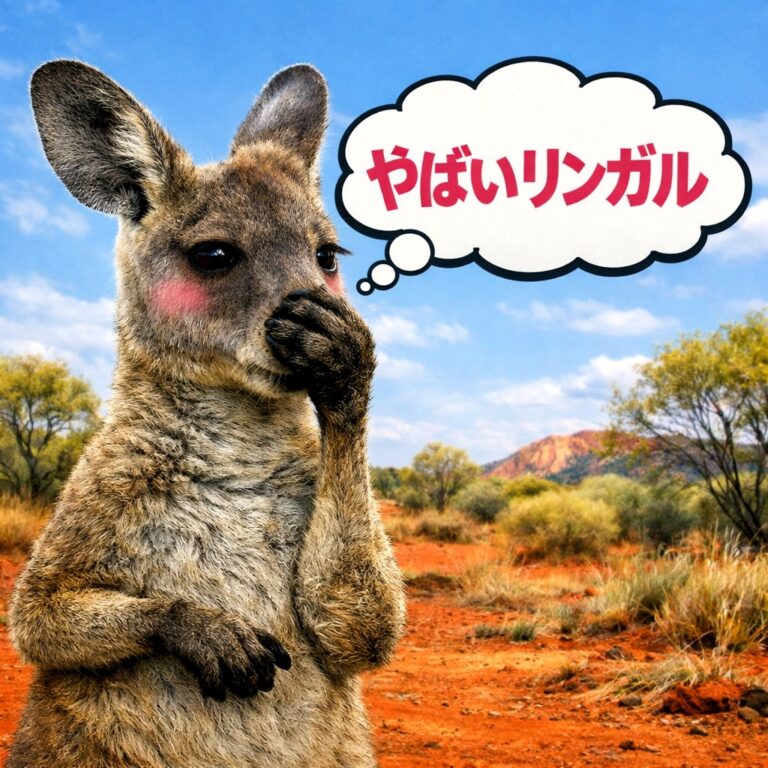
    Kangaeroo.com originally started as a bit of a joke site focused on Strine–the word to describe Australian English that is a play on the word “Australian” as pronounced in a broad Aussie accent. In the earliest years of the site, language played a central role in content. I created categories like やばいリンガル, which was loosely for words that were a little bit on the naughtier side, or yabai, in both English and Japanese. Then we had 豪cabulary that honed in on individual words that are distinctly Australian with the category being a portmanteau of go (豪), the kanji abbreviation used in Japanese for the now virtually archaic name for Australia…

  • |

    Japan’s Fans Still Go Mad For Australia’s Most Successful Film Franchise

    One of the most outstanding characteristics I have found of many Japanese people in almost four decades of living here is that it is highly common for fun to be taken very seriously, indeed. One area where I have seen that trait on display comes with the franchise related to Mad Max, whose five movies dating from 1979’s Mad Max to Furiosia: A Mad Max Saga in 2024 make it the most successful Australian cinematic series in history. In fact, had it not been for avid fans in Japan, the franchise would probably not have continued past the first entry, but Mad Max has also given back to Japan, inspiring…

  • | |

    Oh, Maggie I Should Have Known! Bubble Era Tokyo’s Aussie Haven

    When I first got to Japan in the late 1980s, Australia was hot property–mainly in a literal sense for real estate investment, but also for honeymooners and koala fans. But finding anything “Australian” in Tokyo was bloody hard and homesickness particularly strong in those days, so I was deeply grateful for Maggie’s Revenge and the kangaroo awning that advertised the establishment. Maggie’s Revenge was an Aussie-themed bar in the Roppongi nightclub district of Tokyo, which was a bit of a drag for me to get to as I was living in the northern part of the capital at the time. Sometimes, you could buy a meat pie there, and always…

  • How Japanese Men Shaped An Australian Language

    日本人男性が育てたオーストラリアのある言語 Japanese people living in far northwestern Australia played a crucial role in development and use of an Australian language. オーストラリア北西部で暮らしていた日本人たちが、あるオーストラリアの言語の発展に大きな役割を果たしていた――そんな事実が改めて注目されている。 Mostly male pearl divers, the Japanese people who lived in and around Broome in the late 19th to early 20 centuries influenced the Broome Pearling Lugger Pidgin. 19世紀末から20世紀初頭にかけて、主に男性の日本人真珠潜り師たちが多く暮らしていたブルーム周辺では、「ブルーム・パーリング・ラッガー・ピジン」と呼ばれる言語が使われていた。 Broome Pearling Lugger Pidgin is named for the lugger boats used in the pearling industry around Broome, which was booming at the start of the 20th century. The pidgin is Malay-based, but had a strong Japanese tinge, as well as incorporated English and various Indigenous Australian languages. このピジン語はマレー語をベースに、英語や先住民の諸言語が混ざり合い、さらに強い“日本語の風味”が加わっていた。 The industry attracted a diverse number of ethnicities and people groups, including, Malays,…

  • | |

    A Symbol Of Japan That Fits Australia Like A Shoe

    Given the powerful pull of the surf culture in Australia, a link with Katsushika Hokusai‘s The Great Wave Off Kanagawa that immediately conveys an image of Japan was almost inevitable, but also symbolizes the strong ties between the two countries almost made for each other. Countless Australian companies, organizations, entrepreneurs, artists and others utilize or have utilized directly or derivatively the iconic Japanese work forming one of Hokusai’s Thirty-six Views of Mount Fuji. Even though the Great Wave is an instantly recognizable image that embodies the essence of Japanese spirit, particularly with the inclusion of Mount Fuji, Australia has long recognized the work as a shared connection between the countries….