
Blog

  • Why Do Aussies Love Their “Trackies”?

    なぜAussieは「Trackies」が大好きなの? 朝早くコンビニへ行くと、パジャマ姿の人を見かけることがあります。オーストラリアでは、その代わりによく見かけるのが…「trackies」です。 スーパーへ。ガソリンスタンドへ。犬の散歩へ。時にはカフェへ。 「今日はちょっとそこまでだから。」 そんな気軽な気持ちで、多くのAussieが愛用しているのが、この快適なズボンなのです。おしゃれを競うためではありません。何よりも「楽だから」。それが、Aussieらしいところです。 Word Trackies Pronunciation /ˈtrækiːz/ Meaning トラックスーツやスウェット上下、または特にトラックスーツのズボン(ジャージ)を指すAussie英語です。 日本語なら、「ジャージ」「スウェットパンツ」「部屋着」が近いでしょう。 日常会話では特にズボンだけを指すことが多く、 “I’m just wearing my trackies.”と言えば、「今日はジャージだから。」という意味になります。 Example I’m staying home today, so I’m living in my trackies. 「今日は家でのんびりするから、一日中ジャージだよ。」 また、 It’s too cold for shorts. I’ll put my trackies on. なら、「短パンじゃ寒いから、ジャージを履こう。」という意味になります。 日本語で言うと? 日本では「ジャージ」は学校の体育や部活動のイメージが強いかもしれません。一方、Aussieではもっと生活に溶け込んでいます。近所へ買い物に行くときも、休日に家でくつろぐときも、飛行機で長時間移動するときも、気軽に履く人がたくさんいます。決して「だらしない」という印象ではなく、「今日はリラックスする日なんだな。」くらいの感覚です。 Australia–Japan Connection 日本でも、コロナ禍以降は部屋着やスウェットで過ごす時間が増えました。Aussieでは、それよりずっと前から「快適さ」がファッションの一部でした。もちろん、結婚式やレストランではきちんとした服を着ます。でも、近所への買い物くらいなら、trackiesで十分。そんな肩の力の抜けた暮らし方も、Aussie文化の魅力です。 Aussieには、「人は服ではなく、人柄で判断する。」という雰囲気があります。だから、ブランド物のスーツを着ていても偉いわけではありません。反対に、trackies姿でも素敵な人はたくさんいます。快適さを大切にしながら、自然体で暮らす。そんなAussieらしい価値観が、「trackies」という何気ない言葉にも表れているような気がします。


  • Why Do Aussies Say “Knockback”?

    What Does “Knockback” Really Mean? Aussieが「Knockback」と言うのはどういう意味? Have you ever gone for a job you really wanted… and didn’t get it? Or invited someone out, only to hear “Sorry, another time.” An Aussie might shrug, smile and say, :Ah well, I got a knockback.” It’s one of those wonderfully practical Strine expressions. Life doesn’t always go your way. Sometimes you get a knockback. Then you dust yourself off and have another go. 「第一希望の会社に落ちた。」「ローンの審査に通らなかった。」「告白したけど断られた。」 人生には、思いどおりにならないことがあります。そんなときAussieがよく使うのが、”knockback”というStrineです。 意味は、「断られること」「却下されること」「不採用」「拒否」など。決して珍しい出来事ではなく、「まあ、そんなこともあるさ」という前向きな気持ちを含んだ表現として使われることが多い言葉です。 Expression knockback Pronunciation /ˈnɒkbæk/ Meaning 断られること。 拒否されること。 不採用になること。 希望がかなわないこと。 また、動詞として”knock back”なら、「断る」「拒絶する」という意味になります。 Example “Did you get the job?” “No, I got a knockback.” 「仕事、決まった?」 「いや、不採用だったよ。」 また、 “The bank knocked back my loan application.” なら、「銀行にローンを断られた。」という意味になります。 日本語で言うと? 日本語なら、「断られた」「落とされた」「却下された」「ダメだった」などが近いでしょう。 でも、Aussieの…

  • | |

    Why Do Over 100 Aussie Communities Have Japanese Sister Cities?

    なぜ100を超えるオーストラリアの自治体が日本の姉妹都市を持っているのでしょうか? From school exchanges to sporting visits and lifelong friendships, sister-city relationships have quietly connected Australians and Japanese for decades. Today, more than 100 Australian communities have an official partnership with a Japanese city. 学校交流やスポーツ交流、市民同士の友情まで――姉妹都市交流は長年にわたり日豪の人々を結び続けてきました。現在、100を超えるオーストラリアの自治体が日本の都市と正式な姉妹都市関係を結んでいます。 Friendship begins between communities 友情は町と町から始まる National treaties are signed by governments, but sister-city relationships are built by ordinary people. Students, teachers, musicians, athletes and volunteers have travelled between Australia and Japan for decades, creating friendships that often last a lifetime. 国同士の条約は政府が結びますが、姉妹都市交流を支えているのは市民です。学生や教師、音楽家、スポーツ選手、ボランティアなど、多くの人々が長年にわたり日豪を行き来し、生涯続く友情を育んできました。 More than 100 partnerships Australia and Japan currently have 107 sister-city and sister-state relationships. Together they also support more than 550 sister-school partnerships, making this one of the world’s most extensive local-government exchange networks….

  • | | | | |

    Why Have Thousands Of Young Aussies JET-ted Off To Live And Work In Japan?

    なぜ何千人ものオージーが日本で暮らき、働く道を選んだのでしょうか? Since 1987, the JET Programme has brought thousands of young Australians to Japan as assistant language teachers and international coordinators. Many arrived expecting a one-year adventure, but found lifelong friendships and careers instead. 1987年に始まったJETプログラムは、何千人ものオーストラリアの若者を外国語指導助手(ALT)や国際交流員として日本へ迎えてきました。1年間の経験のつもりが、一生の友情や仕事につながった人も少なくありません。 An idea with a big vision 大きな夢から始まった交流事業 The Japan Exchange and Teaching (JET) Programme was launched in 1987 by the Japanese Government to promote international understanding at the local level. Australia became one of the first participating countries and remains one of the programme’s largest partners. JETプログラムは1987年、日本政府が地域レベルで国際交流を深めることを目的に始めました。オーストラリアは開始当初から参加しており、現在も主要な参加国の一つとなっています。 Far more than teaching English 英語を教えるだけではない Australian participants teach English in schools, but they also introduce students to Australian culture, sport and everyday life. In return, they learn…

  • Did The Sun Never Shine Brighter?

    What Does “Never Saw the Sun Shine Brighter” Mean? Aussieが「Never Saw the Sun Shine Brighter」と言うのはどういう意味? An old mate has just won the lottery. Another has become a grandfather for the first time. Someone asks how they’re feeling. With a huge grin, the answer comes back: “I never saw the sun shine brighter.” Nobody is talking about the weather. It’s a wonderfully old-fashioned Aussie way of saying, “I couldn’t be happier,” or “Life has never looked better.” Although it’s not heard as often today, you’ll still come across the expression in older books, films and conversations with older Aussies. 日本語には、「空まで晴れやか」という表現があります。Aussieにも、それによく似た言い回しがあります。それが、”Never saw the sun shine brighter” というStrineです。もちろん、本当に太陽がいつもより明るく輝いているわけではありません。 「これ以上ないくらいうれしい。」「人生最高の日だ。」「幸せでいっぱいだ。」 そんな気持ちを表す、美しい表現です。 どこか詩のような響きがあり、昔のAussieが好んで使った言葉として今でも親しまれています。 Expression Never…

  • Why Do Aussies “Shoot Through Like A Bondi Tram?”

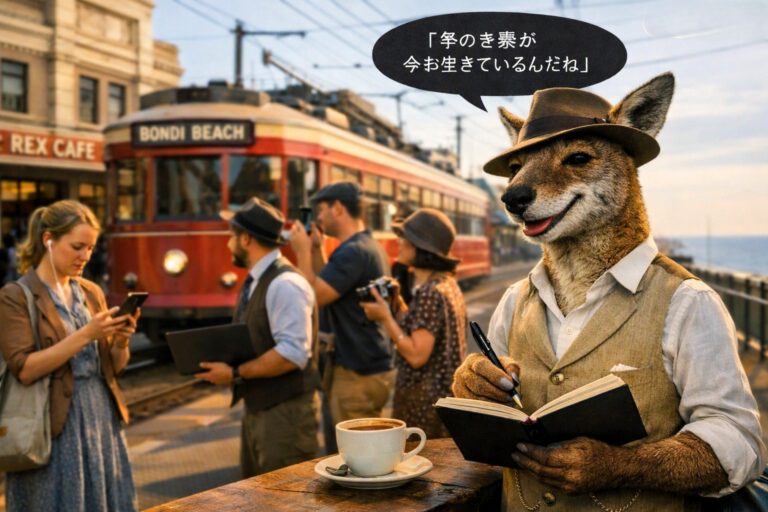
    What Does It Even Mean? Aussieが「Shoot Through Like a Bondi Tram」と言うのはどういう意味? Imagine you’ve just finished a barbecue. Everyone is still chatting when one guest suddenly glances at their watch, says, “See ya!” and disappears before anyone can reply. An older Aussie might laugh and say, “He’s shot through like a Bondi tram.” The expression paints a vivid picture of someone leaving in a tremendous hurry. Although Sydney’s famous Bondi trams disappeared decades ago, the saying has survived as a colourful reminder of old Australia. かつてシドニーには、街中を走る路面電車がありました。中でもボンダイ行きのトラムは、本数が多く、テンポよく走ることで知られていました。そこから生まれたのが、”shoot through like a Bondi tram”というStrineです。 意味はとてもシンプル。「ものすごい勢いで立ち去る」「大急ぎで帰る」「さっさと姿を消す」いうことです。急いで仕事へ向かう人にも、飲み会を早めに切り上げる人にも使える表現です。 Expression shoot through like a Bondi tram 発音 /ʃuːt θruː laɪk ə ˈbɒndaɪ træm/ Meaning 急いで立ち去ること。あっという間に姿を消すこと。突然帰ること。 現在では単に”shoot through”だけでも、「もう行くね。」「失礼するよ。」という意味でよく使われています。 Example…

  • How Much Is “Ninety To The Dozen”?

    What Does “Ninety to the Dozen” Mean To Aussies? Aussieが「Ninety to the Dozen」と言うのはどういう意味? We’ve all met someone like this…You’re having a quiet cup of coffee when a friend arrives. Before you’ve even taken your first sip, they’ve told you about work, the kids, their holiday, the weather, the football, the neighbour’s dog and what they had for breakfast. Without taking a breath. An older Aussie might smile and whisper, “She’s ninety to the dozen today.” It isn’t meant to be cruel. It’s just a colourful way of saying someone is talking very, very fast—and doesn’t seem likely to stop anytime soon. こんな人、あなたの周りにもいませんか? 久しぶりに友達とカフェで会いました。 席に座った瞬間から、仕事のこと。 家族のこと。 旅行のこと。 天気のこと。 昨日の晩ご飯のこと。 次から次へと話が止まりません。 そんな様子を見て、年配のAussieなら笑いながら、…

  • Australia Meets Japan: Art, Music, Wine And An Aussie-Kiwi Catch-Up

    Aug. 21 – Early September, 2026 Ron Mueck Keeps Staring Back オーストラリアを代表する現代彫刻家ロン・ミュエクの大規模展が、六本木の森美術館でまだまだ開催中です。超リアルな人物彫刻と大胆なスケール感で知られるミュエクの作品は、見る側の「人間って何だ?」という感覚まで揺さぶってきます。会期は9月23日までなので、まだ間に合います。 Australia’s Ron Mueck is still looming large at the Mori Art Museum. His astonishingly realistic figures and wild shifts in scale make this much more than a stroll around a gallery — it’s an encounter with the strange business of being human. The exhibition runs until September 23, so there’s still plenty of time to get along and have a good look. THIS WEEKEND! Official website: Mori Art Museum — Ron Mueck Ticket information: Advance online booking is recommended but not essential if time slots remain available. Opening hours: Monday, Wednesday–Sunday 10:00–22:00; Tuesday 10:00–17:00. Last admission 30 minutes…

  • What Do Aussies Mean By “What’s That Got To Do With The Price Of Fish?”

    「魚の値段と何の関係があるの?」って、どういう意味? Have you ever been talking to someone who suddenly changes the subject completely? Imagine you’re chatting with an Aussie friend about cricket. “Australia’s batting looks strong this year.” Your mate replies, “My neighbour bought a new lawnmower.” You stop for a moment, wondering what that has to do with cricket. An older Aussie might grin and say: “What’s that got to do with the price of fish?” They’re not asking about seafood. They’re really saying, “What does that have to do with what we’re talking about?” 話が急に飛んでしまう人、いませんか? 友達とクリケットの話をしていたとします。「今年のオーストラリア代表は打線が強そうだね。」すると相手が突然、「そういえば、うちの隣の人が芝刈り機を買ったんだ。」 ……え? そんなとき、年配のAussieなら笑いながら、 “What’s that got to do with the price of fish?” と言うかもしれません。 もちろん、本当に魚の値段を知りたいわけではありません。 意味は、「それ、今の話と何の関係があるの?」ということです。 相手をたしなめる時にも使いますが、多くの場合はユーモアを交えた軽いツッコミとして使われます。 Expression What’s that got to…

  • What Does An Aussie Do With Their Stubbies?

    「Stubbies」はビール?それともズボン? オーストラリアで初めてバーベキューに招待された人が、こんな会話を耳にしました。 “Chuck on ya stubbies and grab a few stubbies.” 「えっ? 同じ言葉を二回も言った?」 実は、どちらも正解です。 stubbies は、Aussie英語の中でも特に面白い言葉のひとつ。 文脈によって、 ① 男性用の短パン にも、 ② 小瓶のビール にもなるのです。 初めて聞くと混乱しますが、Aussieなら会話の流れだけでどちらの意味かすぐに分かります。 Word stubbies 発音 /ˈstʌbiz/ Meaning ① 男性用の短パン 膝上までの短いショートパンツ。 暑い夏の日や庭仕事、バーベキューなどでよく見かけるAussieの定番スタイルです。 ② 小瓶ビール 缶ビールではなく、小さなガラス瓶に入ったビール。 パブやボトルショップでは今でも stubbies と呼ばれることがあります。 Example It’s too hot for jeans. I’m wearing my stubbies. 「今日は暑すぎるから、短パンで行くよ。」 また、 Pick up a six-pack of stubbies on your way over. 「来る途中で小瓶ビールを6本買ってきて。」 日本語で言うと? ① は、 「半ズボン」 「ショートパンツ」 ② は、 「小瓶ビール」 が近い表現です。 同じ単語で服と飲み物を表す日本語はほとんどありません。 だからこそ、stubbies は覚えておくとAussieらしさを感じられる単語です。 Australia–Japan Connection 日本では夏祭りや花火大会に浴衣という定番スタイルがあります。Aussieの夏なら、Tシャツ・stubbies・サンダルが定番です。そして、エスキー(クーラーボックス)の中には冷えた stubbies。 同じ言葉で「履いているもの」と「飲んでいるもの」を表せるなんて、いかにもユーモア好きなAussieらしいですね。 高価なトロフィーよりも、一つの古びた帽子。そんなところAussie英語には、「えっ、同じ単語?」と思わせる言葉が少なくありません。stubbies も、その代表選手です。でも、会話を聞いていると不思議なくらい混乱しません。なぜなら、「短パンを飲む」ことも、「ビールを履く」こともありませんから。文脈を楽しめるようになると、Aussie英語はもっと面白くなります。にも、オーストラリア人が伝統を大切にする国民性が表れています。 Related Words