


Bogue

Bogue

is our affectionate cultural examination of the Australian bogan.

We are interested in boganism not as something to ridicule or look down upon, but as a distinctive and important part of Australian life. The bogan has its own language, fashions, music, humour, food, cars, traditions, attitudes and ways of expressing identity.

We explore where these characteristics came from, how they have changed, and what they tell us about Australia and Australians. We look at the history and evolution of the bogan, as well as contemporary trends and the way bogan culture has influenced mainstream Australian life.

We also examine the phenomenon from overseas, including its sometimes surprising connections with Japan.

There is plenty of humour here, but the humour is affectionate rather than contemptuous. We recognise that “bogan” can sometimes be used as a derogatory label, and we do not use it to make assumptions about people’s intelligence, education, income or worth.

In short, Bogue celebrates, investigates and occasionally has a good laugh about one of Australia’s most recognisable cultural phenomena.

We’re not looking down on the bogan. We’re looking at the bogan — proudly.

ボーグ

は、オーストラリアの重要な文化現象である「ボーガン(bogan)」を、親しみと敬意を込めて探るコーナーです。

ここで取り上げるのは、人をからかったり、見下したりするための「ボーガン」ではありません。ボーガンには、独特の言葉、ファッション、音楽、ユーモア、食文化、車、習慣、価値観、そしてアイデンティティの表現があります。

私たちは、ボーガン文化がどのように生まれ、どのように変化してきたのか、そしてオーストラリア社会やオーストラリア人の暮らしについて何を物語っているのかを探ります。歴史だけでなく、現在のトレンドや、ボーガン文化が一般的なオーストラリア文化に与えた影響にも注目します。

さらに、海外から見たボーガン文化や、日本との意外なつながりについても考察します。

もちろん、ユーモアも大切にします。ただし、それは侮蔑ではなく、親しみを込めたものです。「ボーガン」という言葉が侮蔑的に使われる場合があることも踏まえ、人の知性、学歴、収入、社会的価値などを決めつけるためには使いません。

つまり「ボーグ」は、オーストラリアを代表する文化現象のひとつを、誇りを持って、真面目に、そして時には大いに笑いながら見つめるコーナーです。

ボーガンを見下すのではなく、ボーガンを誇りを持って見つめます。

  • Bog Words And The Goldmine Of Bogan Language

    Bogan culture generates an astonishing amount of linguistic creativity. The fact that Australians can keep attaching suffixes to bogan is itself linguistically interesting. Researchers describe the word as unusually productive in Australian English. And then there is bogan pronunciation. The stereotype exaggerates features of Australian English: fishing → fishin’going → goin’mate → maaate The dropping of final consonants, broad vowels, swearing and exaggerated informality become part of the performance of bogan identity.

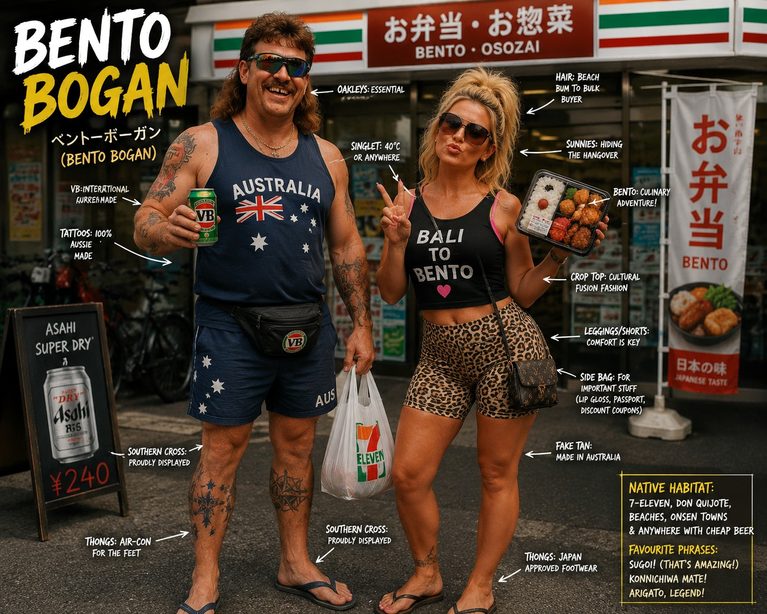
  • The “Bento Bogan”:日本に出現した新種のオージー

    日本のインバウンドブームが続く中で、 オーストラリア人観光客の“新しいステレオタイプ”が誕生している。オーストラリアの一部では、これを冗談めかして “日本のボーガン化(boganisation of Japan)” と呼び始めている。 背景は本物だ。 これらが重なり、 オージーの日本旅行が過去最高レベルに増加。2025年の報告では、 2024年1〜9月のオーストラリア人訪日客は 637,300人。 これは2019年の記録的期間と比べて 42%増。 そんな中で、オージーの間で冗談として語られ始めた新キャラがある。 The Bento Bogan(ベントー・ボーガン)とは? これは、 “バリでのオージー文化パッケージ”をそのまま日本に持ち込んだ人 を指す軽いジョーク。その文化パッケージとは: これらを全部抱えたまま、 コンビニの唐揚げ棒と駅弁を手に日本を闊歩するオージー像。もちろん、これはあくまで ユーモアとしてのステレオタイプ。でも、 日本の礼儀正しさとオージーの“気楽さ”がぶつかると、 こういう文化的ミックスが自然に生まれるのが面白い。 なぜ“Bento Bogan”が生まれたのか? 理由はシンプル。 これらが重なり、 “日本で自由に楽しむオージー”という新しい文化像が形成された。それが冗談として Bento Bogan と呼ばれているわけだ。 文化的には何が面白い? Bento Bogan は、 オーストラリアのボーガン文化が海外でどう変形するか を観察できる絶好のケース。 これらが日本という全く異なる文化環境で 新しいキャラクターとして再構成される。文化の輸出と変形の好例。

  • The “Bento Bogan”

    Australia’s tourism boom in Japan has produced a new stereotype of the Australian tourist in Japan. Some Australian commentary has started jokingly referring to this phenomenon as the boganisation of Japan. The background is real: Australian arrivals to Japan surged after the pandemic, helped by Australia’s proximity to Japan, favourable exchange rates and Japan’s enormous appeal as a destination. One 2025 report noted that Australian visitors to Japan reached 637,300 between January and September 2024, up 42% on the equivalent record period in 2019. And some Australians have begun joking about a new breed: The Bento Bogan A person who has somehow transported from Bali to Japan the cultural package…

  • Bogan Pride

    Bogan pride is probably the most important cultural development of the bogan culture. Calling someone a bogan used to be essentially saying: “You’re beneath me.” Increasingly, people started saying: “Yep. I’m a bogan. Got a problem with that?” That is classic cultural reclamation. The same process has happened with many supposedly derogatory identities around the world. But Australian bogan pride has a particularly Australian flavour because it overlaps with: Roslyn Rowen’s research specifically links the positive reappropriation of “bogan” with Australian nationalism and the Australian tendency to celebrate the “ordinary” person.

  • 「ボーガン」という言葉はどこから来たのか?

    ここがまた、いい感じに“モヤッ”としている。 世間でよく語られる説はこんなところだ。 いろいろ言われているけれど、 現時点で一番有力なのは 1980年代初期のメルボルン発 という説。ただし、最終的な語源はまだハッキリしない。この“曖昧さ”もまたオーストラリアらしい。 歴史家ブルース・ムーアの発見 歴史家で言語学者のブルース・ムーアが見つけたのは、1984年のメルボルン・ザビエル校の学生誌。 そこに 「ボーガン人形」 という架空キャラが登場していて、 すでに今のボーガン像とほぼ同じ特徴を持っていた。 などなど、今見ても「うん、ボーガンだわ」と納得するスタイル。 By the late 1980s it was spreading nationally. By the early 1990s, it was essentially established Australian slang. 翌年にはサーフ系雑誌 Tracks にも登場し、 1980年代後半には全国に広がり始め、 1990年代初頭には完全に“オーストラリアのスラング”として定着した。 そして一番面白いポイント この言葉を広めたのは、 「自分たちより文化的に洗練されていない人」を指して使っていた、 アッパーミドル階級の私立校ティーンたちだった可能性が高い。 つまり、ボーガンは、ボーガンじゃない人たちが作った言葉かもしれない。 これ、文化史としてめちゃくちゃ面白い。 階級、センス、アイデンティティが入り混じって、 オーストラリアらしい“ゆるい社会学”がそこにある。

  • Where Did “Bogan” Come From?

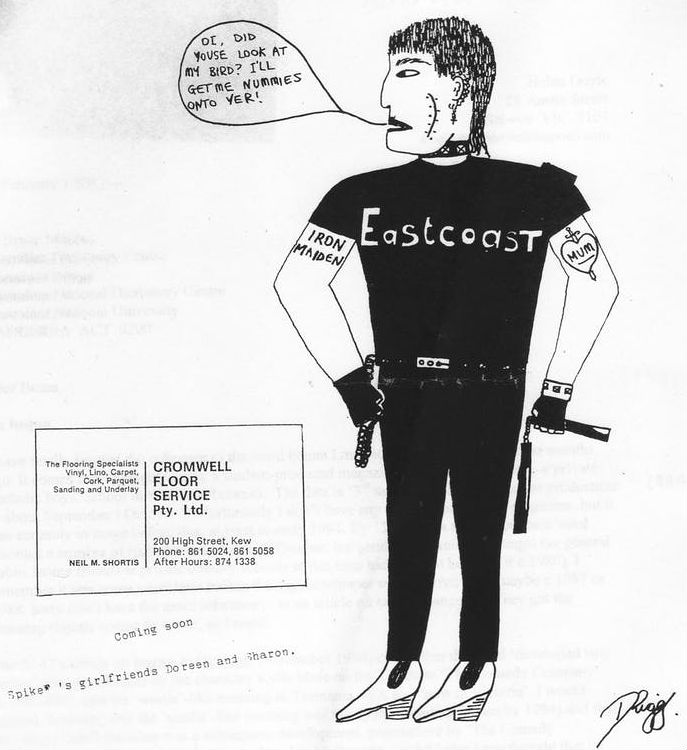
    This is where things get wonderfully murky. The popular theories include: The evidence currently points most strongly toward Melbourne in the early 1980s, although the ultimate etymology remains uncertain. Historian and linguist Bruce Moore found evidence from 1984, in a student magazine at Melbourne’s Xavier College, describing a fictional “bogan doll”. The character already possessed many of the stereotypes we would recognise today: tattoos, long hair, heavy-metal clothing, sleeveless denim, etc. The word then appears in a 1985 issue of Tracks magazine. By the late 1980s it was spreading nationally. By the early 1990s, it was essentially established Australian slang. The really funny part The word may have been popularised…

  • Bogan Culture: A Cultural Report

    Executive summary The first thing to understand is that “bogan” is not really the name of a single, coherent social group. It is a remarkably flexible Australian cultural label. At various times it has meant: That last transformation is probably the most interesting. “Bogan” began largely as an insult but has been partly reclaimed as a badge of authenticity, national identity and resistance to cultural snobbery. Linguist Roslyn Rowen describes it as a distinctive Australian cultural keyword whose negative meaning can be transformed into positive self-identification and Australian nationalism. And there is a delicious paradox at the heart of it: The bogan has become fashionable precisely because the bogan is…

  • |

    Why Do Aussies Call People “Pissants”?

    やばいリンガル: なぜオーストラリア人は「pissant」と呼ぶの? 「小さいヤツ」が必ずしも「弱いヤツ」とは限らない? オーストラリア人がスポーツを見ながら、 “He’s a real little pissant!” と言ったら、「小さなおしっこアリ?」と辞書を引いても意味が分からないでしょう。 でも、実は pissant はオージー英語らしい皮肉が詰まった言葉です。 相手を「取るに足らないヤツ」とバカにするときにも使いますが、「体は小さいのにものすごく気が強い人」という意味で、少し感心しながら使われることもあります。 つまり、言葉そのものより話し方が意味を決める表現なのです。 Word pissant 発音 /ˈpɪsænt/ Meaning 主な意味は、 「ちっぽけで嫌なヤツ」「くだらない人」 という悪口です。 しかし、 “He’s only little, but he’s a real pissant.” と言えば、 「小柄だけど負けん気が強い」 という少し肯定的な意味になることもあります。 地域によっては pissant around で 「くだらないことをして時間をムダにする」 という意味でも耳にします。 Example Don’t be such a little pissant. 「そんな小さい人間みたいなことをするなよ。」 日本人ならどう言う? 日本語なら などが近いですが、 「小さいけれど強気」 という少し複雑なニュアンスを一語で表す言葉はあまりありません。 そのあたりが Strine の面白さです。 Scale of Roo-dness 🦘 Scale of Roo-dness ⭐⭐⭐☆☆ (3/5) やや失礼な表現です。仲の良い相手でも使い方には注意しましょう。 Australia–Japan Connection オーストラリアでは、ラグビーやAFL、クリケットなどのスポーツ中継で、体格の小さい選手が大柄な相手に立ち向かう場面があります。 そんな選手を冗談交じりに “little pissant” と呼ぶことがあります。 もちろん、親しい仲だからこそ笑って済む表現であり、初対面ではおすすめできません。 オージー英語は、「悪口だから全部ダメ」という単純な世界ではありません。仲の良い友達同士なら笑いになる言葉も、相手を間違えればケンカの原因になります。だから Strine は単語だけでなく、「誰が、誰に、どんな場面で言ったか」を一緒に覚えると、本当の意味が見えてきます。 Related Terms

  • | | |

    Why Did Aussies Fall in Love with Japan’s Akiya?

    なぜオージーは日本の空き家に魅了されたのか? Lots of Aussies first discovered Japan through “Japow!,” its powdered snow. Now, many are discovering something even more unexpected—its empty country homes. From Niseko to Hakuba and beyond, Aussies are helping breathe new life into communities facing population decline. 多くなオージーが最初に夢中になったのは日本の雪でした。しかし今、彼らを引きつけているのは、地方に残る空き家です。ニセコや白馬をはじめ、日本各地でオーストラリア人が地域に新しい息吹をもたらしています。 Real Estate Romance Started with the Snow すべては雪から始まった The real estate romance relationship began in the 1990s when Aussie skiers discovered the deep powder snow of Hokkaido. Niseko soon became Australia’s favourite overseas ski destination. Many visitors returned year after year, eventually deciding to invest, settle or establish businesses in the region. すべては雪から始まった 1990年代、オーストラリア人スキーヤーが北海道の極上のパウダースノーを発見したことが始まりでした。 ニセコは瞬く間に人気のスキーリゾートとなり、何度も訪れるうちに、移住や投資、事業を始める人が現れました。 From Niseko to Hakuba ニセコから白馬へ After helping transform Niseko into an international resort, Australian…

  • |

    豪キャブラリ:flannie

    In Strine, a flannie is a shirt made out of a wool-like material called flannelette. The flannie, sometimes also called a flanno, is an iconic item of clothing in Australia, often viewed as part of the bogan uniform. ストライン(オージー英語)では、「flannie」とは、フランネルというウールのような素材で作られたシャツのことを指します。「flannie」は「flanno」とも呼ばれることがあり、オーストラリアを代表する衣類の一つであり、しばしば「bogan」の定番スタイルの一部と見なされています。 The flannel can also be used to refer to a wash cloth. Flannelは、雑巾の意味もある。