
Don’t Like Taxes? Hit The Bottom Of The Harbour
Bottom of the harbour is Strine (Australian English) for complex tax evasion schemes. Bottom of the harbour refers to a now illegal scheme of hiding company assets to avoid tax.
 Find out how Japan and Australia, and Japanese and Australians, do business.
日本とオーストラリア、そして日本人とオーストラリア人がどのようにビジネスを進めるのかを探ってみよう

Bottom of the harbour is Strine (Australian English) for complex tax evasion schemes. Bottom of the harbour refers to a now illegal scheme of hiding company assets to avoid tax.
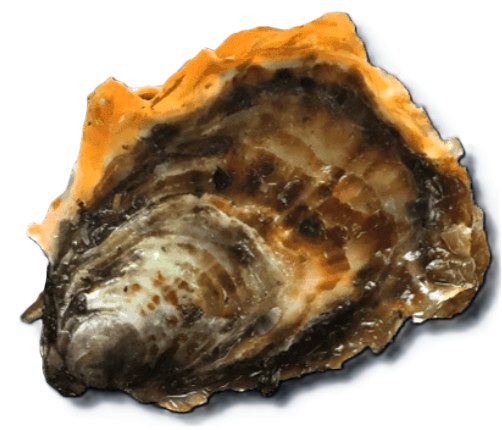
日本のカキはオーストラリアのカキ産業をどう変えたのか? Aussie oysters are famous around the world. Few people realise that one of the industry’s biggest turning points began in Japan. A tiny shellfish—and decades of scientific cooperation—helped reshape Australian aquaculture. オーストラリア産のカキは世界的に高く評価されています。しかし、その発展の大きな転機の一つが日本にあったことは、あまり知られていません。一つの小さな貝と、長年にわたる日豪の科学協力がオーストラリアの養殖業を大きく変えたのです。 An Industry Faces New Challenges 転機を迎えたオーストラリアのカキ産業 For generations, Australia’s oyster industry relied on the native Sydney rock oyster. It remains one of the country’s finest seafoods. But during the 20th century, growers faced disease, slow growth and changing environmental conditions. They began searching for new ideas. 転機を迎えたオーストラリアのカキ産業 長年にわたり、オーストラリアのカキ産業はシドニーロックオイスターを中心に発展してきました。 現在も高級食材として親しまれています。 しかし20世紀になると、病気や成長速度、環境の変化など、新たな課題に直面しました。 生産者たちは新しい可能性を探し始めます。 Looking to Japan 日本に学ぶ Japan had centuries of experience cultivating oysters. Its farmers had developed efficient methods for collecting oyster spat, raising young oysters and managing…

オーストラリア人はいかにして日本で人気クラフトビール醸造所を築いたのか? When Australian Sean Collett moved to Japan, he came to study—not to brew beer. Today, he and his Japanese wife Ayako run Two Rabbits Brewing in Shiga Prefecture, creating beers that blend Australian creativity with Japanese craftsmanship. オーストラリア出身のショーン・コレットさんは、留学のために日本へやって来ました。 しかし現在では、日本人の妻・綾子さんとともに滋賀県で「Two Rabbits Brewing」を営み、オーストラリアの発想と日本のものづくり精神を融合させたクラフトビールを造っています。 From Australia to Lake Biwa オーストラリアから琵琶湖へ Sean Collett first came to Japan as a student at Kyoto University. While living in Japan, he discovered that the country’s growing craft beer scene offered an opportunity to combine two passions—brewing and cultural exchange. Together with his wife Ayako, he founded Two Rabbits Brewing in neighbouring Shiga Prefecture. Today, the brewery welcomes both local customers and visitors from around the world….

なぜサントリーはマーク・“ジャコ”・ジャクソンを起用したのか? In the 1980s, one of Australia’s most colourful sporting personalities unexpectedly found himself on Japanese television. AFL star Mark “Jacko” Jackson wasn’t a movie actor or musician, yet Suntory believed he had something special to offer Japanese audiences. Why? 1980年代、オーストラリアを代表する個性派スポーツ選手の一人、マーク・“ジャコ”・ジャクソンが日本のテレビCMに登場しました。俳優でも歌手でもない彼を、なぜサントリーは起用したのでしょうか。 Bigger Than Footy フットボールを超えた存在 In Australia, Mark “Jacko” Jackson was already famous. A talented Australian Rules footballer, he became equally well known for his humour, confidence and unmistakable personality. His catchphrase, “I’m an Individual”, made him one of Australia’s most recognisable media personalities. フットボールを超えた存在 オーストラリアでは、マーク・“ジャコ”・ジャクソンは人気の高い人物でした。 優れたオーストラリアン・フットボール選手であると同時に、ユーモアあふれる個性的なキャラクターでも知られていました。 「I’m an Individual(俺は俺だ)」という決めぜりふは、多くのオージーに親しまれました。 Japan Was Discovering Australia 日本がオーストラリアに注目していた時代 During the 1980s, Japan’s interest in Australia was growing rapidly. More Japanese families were travelling…
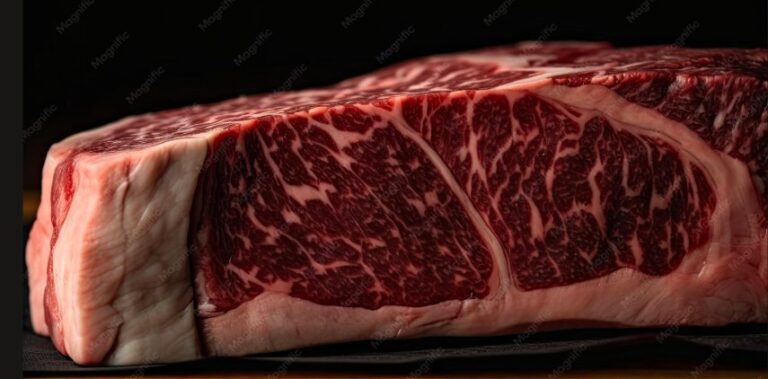
和牛が教えてくれる日豪協力とは? Australia’s wagyu industry is about much more than premium beef. It is the product of decades of trust, shared knowledge and cooperation between Japanese and Aussie producers. In many ways, wagyu has become a symbol of one of the world’s most successful agricultural partnerships. オーストラリアの和牛産業は、高級牛肉を生産するだけのものではありません。その背景には、日本とオージーの生産者が長年にわたって築いてきた信頼と技術交流があります。和牛は、日豪協力を象徴する存在となっているのです。 More Than an Industry 畜産を超えた物語 The success of Aussie wagyu cannot be measured only by export figures or restaurant menus. Its real achievement lies in the partnership that made it possible. Over several decades, producers in Australia and Japan built relationships based on mutual respect, patience and a willingness to learn from one another. 畜産を超えた物語 オーストラリア産和牛の成功は、輸出額やレストランの数だけでは語れません。 本当の成果は、それを支えてきた日豪の協力関係にあります。 何十年にもわたり、生産者たちは互いを尊重し、学び合いながら信頼を築いてきました。 Sharing Knowledge 知識を分かち合う Japanese breeders spent…
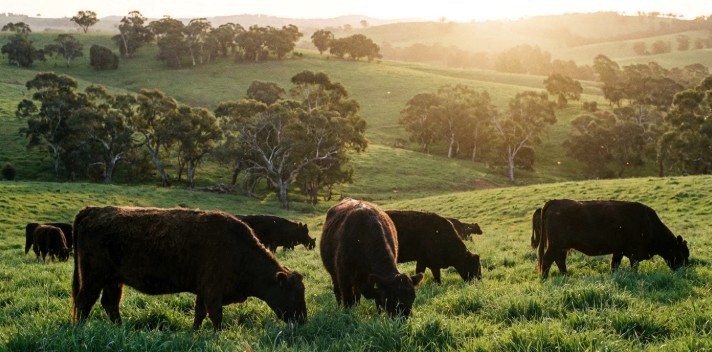
なぜオージーの畜産家は日本の和牛遺伝資源に投資したのか? When Australia’s cattle industry discovered the extraordinary qualities of Japanese wagyu, success was anything but guaranteed. A small group of pioneering Aussie breeders took enormous risks, investing in bloodlines from the other side of the world. Their gamble helped create one of Australia’s most remarkable agricultural success stories. オーストラリアの畜産業が日本の和牛に注目した当時、その成功は決して約束されていませんでした。遠く日本の和牛遺伝資源に投資した少数のオージー畜産家たちの挑戦が、やがて世界的な成功へとつながっていきます。 A Leap Into the Unknown 未知への挑戦 In the early 1990s, premium beef was becoming increasingly important in international markets. While Australia already exported large volumes of beef, a handful of producers believed there was room for something exceptional. Japanese wagyu stood apart from every other breed they had studied. Its extraordinary marbling, eating quality and long-established reputation convinced them that…
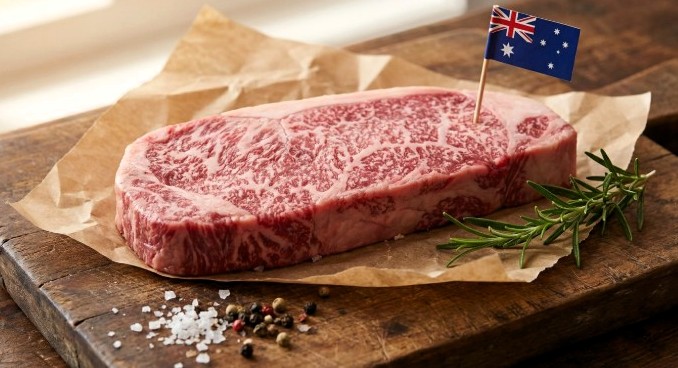
和牛はどのようにオーストラリアで成功を収めたのか? Australia is now one of the world’s largest producers of wagyu beef, but few people know that its success began with a remarkable partnership between Japanese genetics and Aussie cattle producers. This is the story of how trust, science and shared ambition created one of the world’s great agricultural success stories. 現在、オーストラリアは世界有数の和牛生産国です。しかし、その成功が日本の和牛遺伝資源とオージーの畜産家たちとの協力から始まったことは、あまり知られていません。信頼と技術、そして共通の志が生み出した日豪農業協力の物語です。 A Japanese Treasure Finds a New Home 日本の宝が南半球へ For centuries, wagyu cattle were raised almost exclusively in Japan. Their unique genetics produced the exceptional marbling that made Japanese beef famous throughout the world. 和牛は何世紀もの間、日本だけで大切に改良・飼育されてきました。その優れた遺伝資源は、美しい霜降り肉を生み出し、日本を代表する食文化の一つとなりました。 Until the late twentieth century, very few wagyu cattle or their genetics left Japan. 20世紀後半まで、生きた和牛やその遺伝資源が海外へ渡ることは、ほとんどありませんでした。 Everything changed when Aussie cattle producers recognised the…

A longtime cobber contacted me this morning to let me know about a story of some of the Aussies doing roaring business in Japan; a market that can be tough to crack. I’m not a businessperson, or even remotely entrepreneurial, but I’ve had the pleasure to get to know plenty of Aussies in Japan who have done remarkably well in the Japanese market. Tracey Northcott is a superstar businessperson. I first met her in 2002 when she was running a cracking business centered on the then fledging field of mobile phones. She has since gone from strength to strength, succeeding in one business after another, all while juggling a busy…

Japan has become pretty much synonymous with high quality construction, but that didn’t prove to be in what was supposed to be a star project in Melbourne but ended up being more of a black hole. The 120-meter-high Melbourne Star Ferris wheel was supposed to be a boon for tourism in Australia’s largest city, as well as a strong leap forward for Sanoyas, an Osaka-based shipbuilding company looking to expand into the amusement park business. The Melbourne Star was plagued from the outset. It was supposed to open in 2006, but didn’t start taking customers until two years later. It ran for just 40 days when it was shut down…

Given the powerful pull of the surf culture in Australia, a link with Katsushika Hokusai‘s The Great Wave Off Kanagawa that immediately conveys an image of Japan was almost inevitable, but also symbolizes the strong ties between the two countries almost made for each other. Countless Australian companies, organizations, entrepreneurs, artists and others utilize or have utilized directly or derivatively the iconic Japanese work forming one of Hokusai’s Thirty-six Views of Mount Fuji. Even though the Great Wave is an instantly recognizable image that embodies the essence of Japanese spirit, particularly with the inclusion of Mount Fuji, Australia has long recognized the work as a shared connection between the countries….
We use cookies to improve your experience on our site. By using our site, you consent to cookies.
Websites store cookies to enhance functionality and personalise your experience. You can manage your preferences, but blocking some cookies may impact site performance and services.
Essential cookies enable basic functions and are necessary for the proper function of the website.
These cookies are needed for adding comments on this website.
Statistics cookies collect information anonymously. This information helps us understand how visitors use our website.
Google Analytics is a powerful tool that tracks and analyzes website traffic for informed marketing decisions.
Service URL: policies.google.com (opens in a new window)