I’ve lived in Japan far longer than I spent in my native Australia. I love my adopted homeland to the bottom of my heart and cannot go close to expressing the gratitude this land has given me for a life I would never have dreamed possible. Yet, in the nearly four decades I have dwelled in Japan, my nostalgia for Australia has never waned. In fact, the further I move from my departure, the stronger the sentiment becomes, admittedly warped and unrealistic. But the yearning has been assuaged by, of all things, tin signs.

Thanks to Temu.com, I’ve been able to find all sorts of signs that allow me to reminisce about my life in Australia.

Having an Aussie-themed garden, the signs are also a perfect fit.

Nobody else has a clue what they mean, but the signs are an indicator to me of a different era.

My memories are deluded; viewed through rose-colored glasses and the distortion amplified by decades living away in a society that can often seem to be insular (and actually is in a lot of ways).
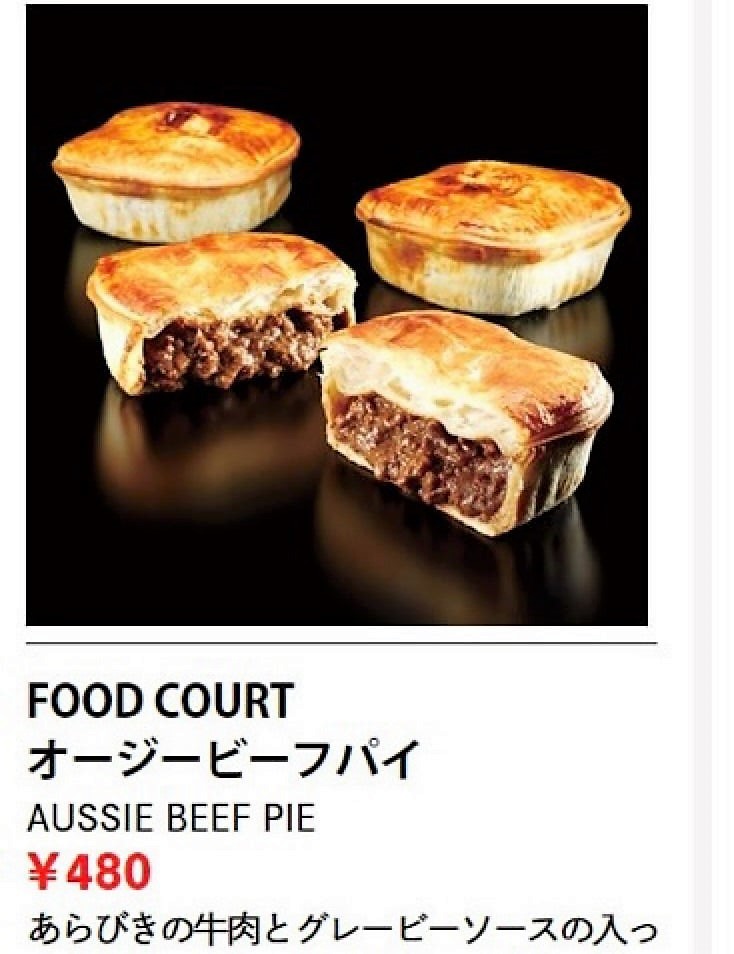
So, what are the signs and what do they mean? Let’s start with the most common, the Four N Twenty pies. They’re Australia’s most popular brand of meat pie, which is the national dish. As a Melburnian, Four N Twenty also symbolized footy, but other states had different brands of pies. Four N Twenty pies are also a reminder of ordering lunch from the school tuck shop. I often used to order a meat pie with tomato sauce, leaving my coins in a brown paper bag and then picking it up from the tuck shop when the lunch bell rang. I went to Catholic schools, so we weren’t allowed to eat meat on Fridays, so I would order an apple pie. I’ve maintained my affinity to meat pies in Japan as Four N Twenty sell at places like Costco (even cheaper than they are in Australia). But the best pies in Japan come from Punk Doily.

Still on the food theme is Arnott’s biscuits, a core part of life for any Australian of my generation. Biscuits were still sold in tins when I was a tiny child. In fact, my earliest memory of life is as a preschooler asking my mother if I could have three biscuits, one for me and one each for my two friends, a brother and sister who lived in the neighborhood. I would eat all three myself, which I reckon is incredibly symbolic of my lifelong battle with gluttony and weight control. The sign doesn’t carry such deep meaning; I bought it because it was cheap, pretty and nostalgic.

Maintaining the national symbol theme, it’s hard to go past Vegemite, the quintessentially Aussie yeast extract spread that is a staple on sangers and all sorts of fare. I’m not a fan, and never really have been. But I do admit that Vegemite tastes good on crackers and covered in a delicious tasty cheese. Otherwise, it doesn’t really appeal to me, probably because it’s pretty healthy.

A taste much more appealing to me comes from the next signs, for Peters and Streets ice creams. Together with treats from Pauls, these ice cream signs adorned nearly every one of the milk bars that had a ubiquitous presence in Australian towns when I grew up (but have apparently almost disappeared now).


For a more adult taste, there’re the beer posters. I’ve got a few, a couple for Victoria Bitter, which is a Melbourne-born brew consumed nationwide, and another for XXXX, a beer symbolic of Queensland (and often said to have been named as it is because the inhabitants of the conservative-leaning state in northeastern are unable to spell “beer.”) I wasn’t a big beer drinker when in Australia, but drank Foster’s Lager when I did imbibe. It was then regarded as Australia’s national beer, but I don’t think Australians drink it at all now. Regarding XXXX, I remember being drawn to Mr Fourex, the cartoon character used to promote the brew. I saw the character on childhood visits to Queensland and have never forgotten the appeal, which must delight the beer’s marketers, who I have to admit did some amazing work to have their product inserted into people’s memories. Mind you, until writing, I thought the character’s name was XXXX Man and only learned of my erroneous recollection when I was horrified to see what a Google search of that term came up with (Editorial advice: Don’t look it up!)


Of course, for Aussie’s of my vintage, the idea of a beer without a smoke, though we used to refer to cigarettes with a word that has become unmentionable among modern audiences. To my great regret, I was a smoker for 30 years and even worked in the tobacco industry. I sincerely apologize to all those I smoked around and plagued with my fumes. I quit 15 years ago (an achievement I regard as one of the greatest in my life), and to this day would murder to be able to just have a single smoke and never think about needing another one again. The craving and urge have never gone away. And nor has my appeal for Winfield cigarettes as promoted in the 1970s by Paul “Hoges” Hogan, a larrikin comedian who would go on to achieve global fame in the 1980s as the titular character of Mick “Crocodile” Dundee in a series of movies. Hoges apparently expressed similar regrets about promoting tobacco use. But his campaign was one of the most successful in Australian advertising history, and I remember ads for Winnies and Peter Jackson smokes in particular being everywhere in Australia while growing up. Winnies even sold in Japan for a while and I have a couple of boxes at home even now.


Australia was still an automaker of sorts when I lived there. I was a particular fan of the “national” car, the Holden (which was only assembled at various plants in Australia from parts made in Japan and the U.S., mostly). I retain the attraction, though I have never owned a Holden car. It is a great source of pride to me that someone in my neighborhood drives a Holden ute. I am sure they have a great story, and I will try to track them down to hear it. Holdens and other cars often got filled with Ampol motor oil, which completes this series of signs.

There’s not really much connection to the insignia of the Royal Australian Air Force (RAAF), but I like it because of the kangaroo connection, and my bike water bottle collections includes a couple of bidons from the RAAF.

It’s a different story for Test Match, which was a cricket board game I played almost incessantly as a kid. I’ve been a lifelong cricket tragic, and I would spend nights and rainy days playing this game with friends and family, or even by myself if nobody else was around. One of my fondest memories of this game is playing the eight-ball over version at a mate’s house at a time when that was still the practice in Australia (which it would be until 1978; ironically the year when this board game would be superseded by a 3-D version).

Finally, there’s the Sun News-Pictorial, a newspaper I read religiously while I was in Australia. It was owned by Rupert Murdoch, an Australian-born media baron who I idolized as a youth for his fierce anti-colonialism, though would come to despise later in life.
References
大ヒット中のTimTamって「豪菓なビスケット」と言っていい? | 考えRoo
Australiana for Australia Day | 考えRoo
Perfect Blending of Iconic Aussie Tastes | 考えRoo
オーストラリアの美味しいビスケットは馴染みのTimTamだけじゃない | 考えRoo
豪州受刑者が「ベジマイト食べる権利」求め提訴 | 考えRoo
豪国民食と言われているVegemiteが90周年を祝う! | 考えRoo
Vegemite Chocolate, Wild West In Chiba And Dreams | 考えRoo
Straya, We’ll See Your Vegemite Chocolate and Raise You with Cough Lolly KitKats | 考えRoo
…ah, so* have a Winfield: The Tiny Tale of Aussie Durries in Japan | 考えRoo