Sports

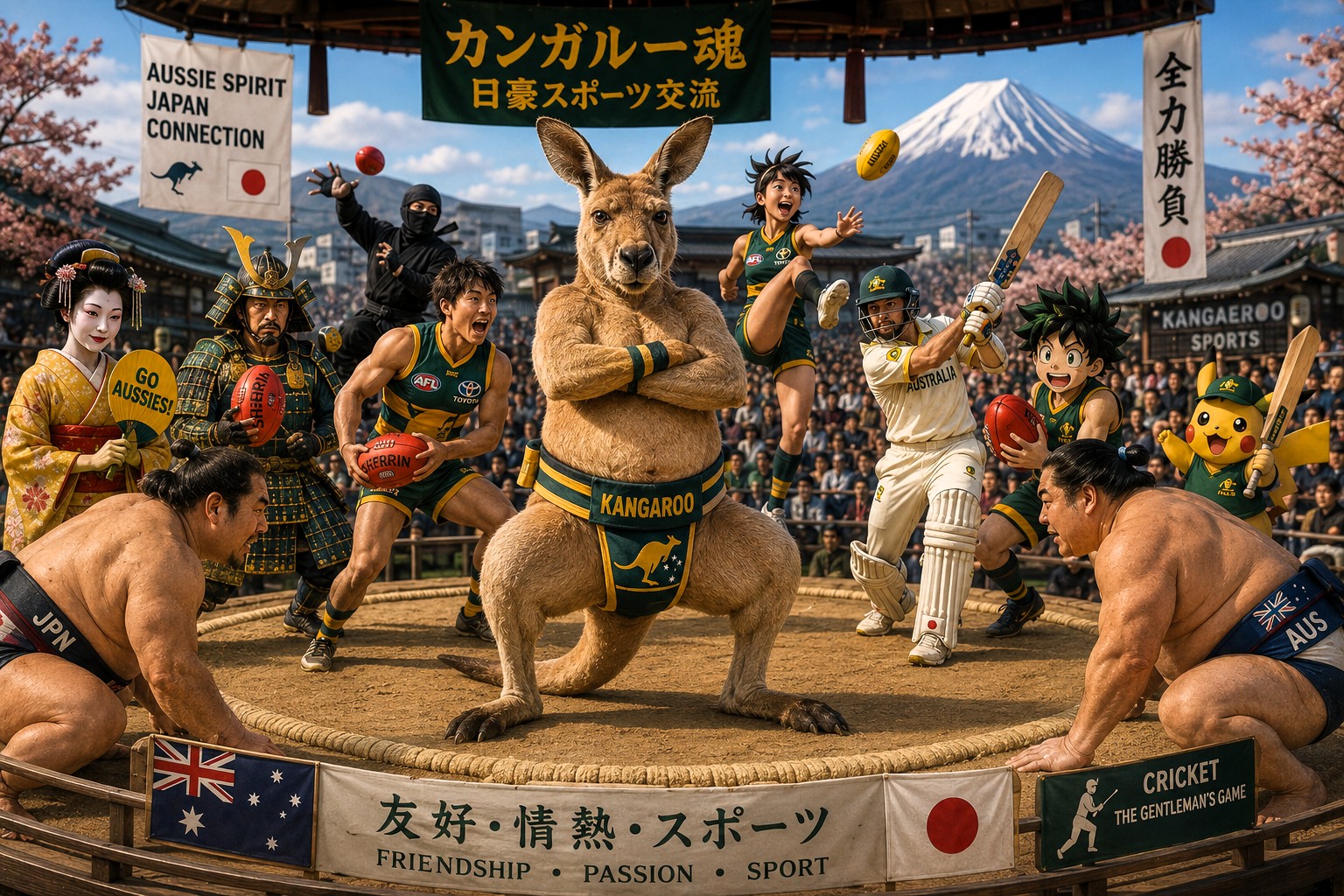
Japan and Australia have not traditionally shared the same sporting preferences, with Australia choosing Aussie Rules and cricket while Japan preferred baseball and sumo. But the great friends are increasingly becoming sporting rivals, too, in soccer and rugby as sporting fields have broadened in recent decades. Learn more here.

「日本とオーストラリアは、これまでスポーツの好みがあまり重なってきませんでした。オーストラリアはオージールールズやクリケット、日本は野球や相撲を中心に発展してきたためです。ところが近年、競技の幅が広がるにつれ、サッカーやラグビーでは“仲良し同士”がライバル関係になる場面も増えてきました。詳しくはこちらでどうぞ

  • |

    No Wonder the Wallabies Were Wallies in RWC2019

    Australia’s rugby team, the Wallabies, were ignominiously dumped from the 2019 Rugby World Cup that Japan is currently hosting (and being lauded for both its organization skills and the rousing performance of its unfancied team). The Wallabies lost badly to England in a quarter final, mostly because they were not good enough as a team. But Kangaeroo.com has also discovered another reason for the Wallabies’ woes. Gorgeous Jindaiji Temple, which supported the Wallabies’ woeful World Cup, is situated in the Tokyo suburb of Chofu, location of the Aussies’ group stage loss against Wales on September 29 that effectively derailed their campaign on the field. Jindaiji had proudly displayed Wallabies jerseys…

  • | |

    (Costumed) Kangaroo Stars In The “Worst Sports Movie Ever Made”

    Matilda has been described online as “the worst sports movie ever made.” Kindly, as it turns out.Matilda was a dreadful, alleged comedy about a boxing kangaroo that challenges for the world heavyweight champion title.The movie was made in 1978, when Muhammad Ali was probably at his most widely popular (and the reigning world champion), and starred Elliot Gould, who was then still not too far off the peak of a career that continues going strong today.Co-starring was another A-lister, Robert Mitchum, so it’s hard to argue that the cast and circumstances surrounding the movie didn’t pack a punch.Unfortunately, the kangaroo featured in the film was clearly a bloke in a…

  • | |

    Boomerang Shrine And Shooting The Rapids

    Mrs. Kangaeroo and I got another wonderful experience shooting down the rapids in the delightful Saitama Prefecture town of Nagatoro, which is also home to a shrine hoping to draw people back with something of an Aussie touch. Boomerang Kaeru Shrine, just outside Nagatoro Station, is dedicated to the worship of frogs, but is actually a play on words. The Japanese for frog is kaeru (蛙), but also a homonym for returning home (帰る), hence the boomerang, which (allegedly) returns to the thrower upon being hurled. (This is a story for another day). Also got to find some Engrish that appealed to my eternal schoolboy side.

  • |

    AFL – Modern Australia’s Religion and Failed Proselytizing in Japan

    If post-European colonization Australian has any sort of religion, there’s a good argument to be made that it could be the indigenous code of football, known as Australian Rules. For most Australians in the southern part of the country, footy provides them with the closest opportunity they will have to a tribal allegiance and generally loyalties toward their team are fervent and frequently location based even now (and almost exclusively the further you go back into the past). The Australian Football League (AFL), administer of the sport, to this day tries to spread the Aussie footy message overseas, but the reality is that the game remains local. Nonetheless, its impact…

  • |

    Australian Football’s Tokyo Area ‘Samurai’ Off to the World Cup

    Australia rarely makes the news in Japan, so it’s interesting to see it on the front page of the Asahi newspaper June 4 evening edition. The story is about Japan’s Aussie Rules team, the Samurais, who’ll be battling it out in the International Cup starting from June 8. Japan has a really small, but thriving, Australian Rules competition, with two leagues (including several all-Japanese teams), the Eastern League, centering on Tokyo and surrounding areas, and the Western League, comprising Osaka and Nagoya. Here’s an excerpt from the Asahi report: サッカー・ワールドカップ(W杯)大会が迫るなか、「世界で最も激しい」というフットボールの世界大会も8月に開かれる。それってラグビー? いえいえ、オーストラリアンフットボール。豪州では国技と言われる大人気のプロスポーツだ。5大会連続で出場する日本代表も、追い込みに入っている。 A translation: Just as the soccer World Cup is about to hit us, another football world championship — this one…

  • | |

    「国家を静止するレース」:競馬のための祝日

    Fiorente wins the 2013 Melbourne Cup[/caption]  先日、日本が「文化の日」があり、祝日となったが、今日(5日)は、オーストラリアが祝日だ。ある意味同じような文化の日を祝っていると言えるかもしれないが、オーストラリアの場合、その「文化」が競馬だ!  世界中にG1レースが大体100件ある中半分以上日本で開催され、間違いなく日本が競馬大国となっている。しかし、日本でも競馬のために祝日がない。  だが、オーストラリアでは11月第一火曜日は「メルボルン・カップ・デー」とし、開催地フレミントン競馬場があるメルボルン市内が休日となっている。他州など、仕事があってもレースが開始する午後2時40分からの数分間ほぼ全国の人々が競馬を見て大盛り上がり。よっぽどのことじゃない限り、同レースを見て、職場などで掛け合う習慣があり、全国のほぼ全員の注目を浴びる。あまりにも影響が大きくメルボルン・カップは「国家を静止するレース」と呼ばれている。  日本がメルボルン・カップと面白い歴史がある。初めて参戦したのは2005年だった。アイ・ポッパーが12着で終わった。しかし、翌年、3200メートル日本馬デルタ・ブルースとポップ・ロックが圧倒的に強く1・2着で争い、デルタ・ブルースが見事に優勝した。  しかし、その直後、オーストラリアで「馬インフルエンザ」が発生し、日本馬のせいとされ入国制限が一層厳しくなった。以降、2010年のトウカイ・トリック以外、日本馬がレースしていない。 追伸:2013年メルボルン・カップが5日午後行ない、初女性調教師としてゲイ・ウォーターハウス氏のフィオレンテ(Fiorente)が優勝した! Fiorente hands Waterhouse historic Melbourne Cup triumph

  • いよいよ日豪対決!Bragging Rights at Stake as Samurai Blue Tackle Socceroos in World Cup Qualifier

    Fierce but friendly rivals Japan and Australia meet in an Asian Football Confederation Round Four World Cup qualifying match at Saitama Stadium 2002 near Tokyo on June 4. アジアサッカー連盟(AFC)ライバル国日本とオーストラリアがサッカー2014年ワールドカップ最終予選を今夜、6月4日、埼玉スタジアム2002で行なう。 Japan, currently top of Group B, need only to take a point from this match to qualify for Brazil 2014. 現在Bグループ首位である日本代表が引き分けでも来年ブラジルで行なうワールドカップ出場が決定となる。 Australia, in third place a point behind Jordan but with a game in hand, will be looking to take home at least one point, but will have its hands full against a team that has realistic hopes of reaching the latter rounds in South America next year. 一方、2位ヨルダンの1点差でありながら試合数が一つ少ないオーストラリア代表は、恐らく引き分けを狙うが日本代表に対してなかなか強さを見せることができないだろう。 Also at stake in this match will be bragging rights between two…

  • |

    ファイティング原田が豪州人と世界戦負けたがオーストラリア人のハートを勝ち取った

    ジョニー・ファメションは、1970年に2人目のオーストラリア人として世界タイトルマッチでファイティング原田を破ることになった。 Johnny Famechon would become the second Australian to defeat Masahiko “Fighting” Harada in a world title boxing match in 1970.