Sports

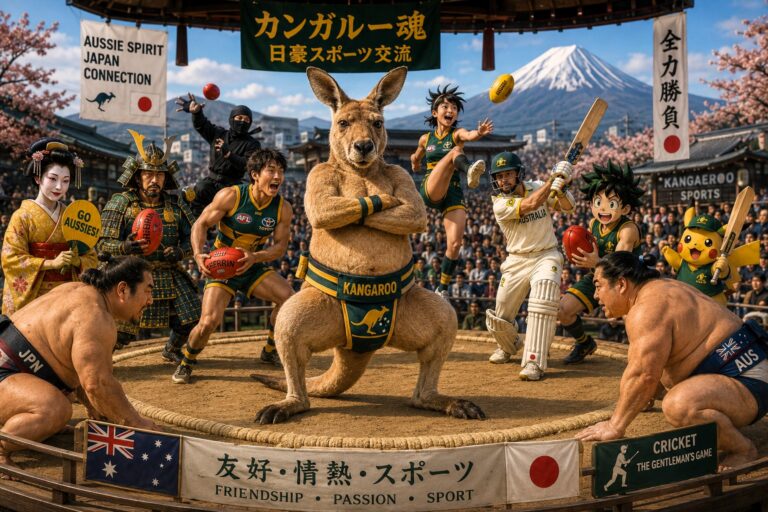
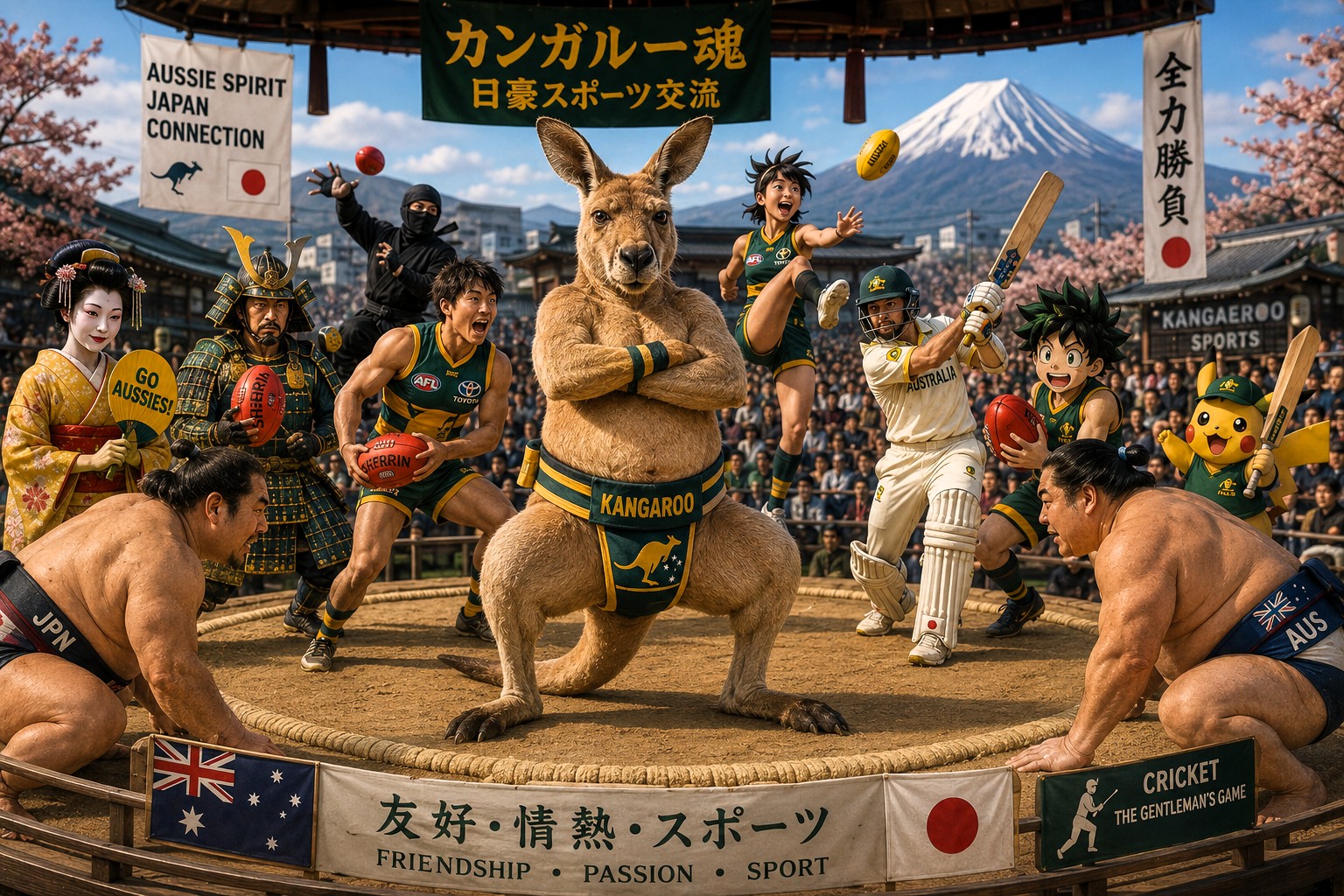
Japan and Australia have not traditionally shared the same sporting preferences, with Australia choosing Aussie Rules and cricket while Japan preferred baseball and sumo. But the great friends are increasingly becoming sporting rivals, too, in soccer and rugby as sporting fields have broadened in recent decades. Learn more here.

「日本とオーストラリアは、これまでスポーツの好みがあまり重なってきませんでした。オーストラリアはオージールールズやクリケット、日本は野球や相撲を中心に発展してきたためです。ところが近年、競技の幅が広がるにつれ、サッカーやラグビーでは“仲良し同士”がライバル関係になる場面も増えてきました。詳しくはこちらでどうぞ

  • | |

    How Did Australians Help Transform The Quiet Japanese Ski Town Of Niseko?

    オーストラリア人はどのように静かなスキーの町・ニセコを変えたのか? That began to change when Australian skiers started returning home with stories of dry, light snow, uncrowded slopes and a long ski season. Word spread quickly. Friends recommended Niseko to friends, ski clubs organised group trips, and specialist travel companies began offering packages to Hokkaido. In the early 1990s, Niseko was already known among Japanese skiers for its deep powder snow. Yet outside Japan, few people had heard of the small Hokkaido resort. But Australians did more than visit. Many chose to stay. 1990年代初め、ニセコは日本のスキーヤーにはすでによく知られた存在でした。しかし海外では、その名を知る人はほとんどいませんでした。 状況が変わり始めたのは、ニセコを訪れたオーストラリア人スキーヤーが、軽く乾いたパウダースノーや混雑の少ないゲレンデ、長いシーズンの魅力を帰国後に語り始めたことでした。 口コミによって評判は広がり、スキークラブがツアーを企画し、旅行会社も北海道へのスキー旅行を販売するようになりました。 しかし、多くのオーストラリア人は観光客として訪れるだけではありませんでした。 More Than Tourists As visitor numbers grew, Australians saw opportunities beyond skiing. Some opened cafés serving familiar breakfasts and good coffee. Others…

  • | |

    Why Did Australians Fall in Love with Niseko?

    なぜオーストラリア人はニセコに魅了されたのか? For many Australians today, Niseko is synonymous with powder snow, winter holidays and a taste of Japan. Yet few realise that Australians played a significant role in introducing this once-quiet corner of Hokkaido to the wider world. The story of Australians and Niseko is not simply about skiing. It is a story of curiosity, cultural exchange and the growing friendship between Australia and Japan. 今日、多くのオーストラリア人にとってニセコは、極上のパウダースノーと冬の休暇を象徴する場所です。しかし、この北海道の静かな地域を世界に知らしめる上で、オーストラリア人が重要な役割を果たしたことはあまり知られていません。 オーストラリア人とニセコの物語は、単なるスキーの話ではありません。好奇心、文化交流、そして日豪の友情の深まりを物語るストーリーです。 A Mountain Hidden in Plain Sight Long before Niseko became an international ski destination, it was primarily known to Japanese skiers. Blessed with abundant snowfall thanks to weather systems crossing the Sea of Japan, the region offered conditions unlike almost anywhere else on…

  • | |

    Monkeying Around With Shared Kobe Steel(e)s

    Of the many commonalities shared by Australia and Japan, perhaps one of the quirkier ones is that both countries are home to a Kobe Steele known for monkeying around. Australia’s Kobe Steele founded the Orangutan Foundation International Australia (OFI Australia), and was awarded the Medal of the Order of Australia in 2021 for her services to conservation and the environment. Japan’s Kobe Steel Ltd., meanwhile, monkeyed around in a far less noble way, falsifying inspection and quality data on steel, aluminium and copper products for years, affecting hundreds of customers and resulting in billions of yen in fines after causing one of Japan’s most significant industrial quality scandals in recent…

  • | |

    The Japan-Australia Link To The Great Train Robbery

    Ronnie Biggs and the Great Train Robbery were pretty well-known among my generation of Australians growing up, and recognition of the famous long-term fugitive was enough in Japan for his 2014 death to be widely reported. What is less established, however, is that both Japan and Australia have a much closer connection to the crook than many in either country know. Biggs was one of a gang of about 16 people who carried out the Great Train Robbery in 1963, making off with 2.61 million pounds (worth about 12.16 billion yen today). Biggs used his share of the haul to pay for almost 40 years on the run, most famously…

  • | |

    Panasonic Super Kangaroos Pouched A History With Plenty Of Bounce

    For decades, Japan had a professional basketball team called the Super Kangaroos, and true to the team’s name, it made great leaps at times. The Matsushita Electric Super Kangaroos, which would later be renamed the Panasonic Super Kangaroos, were founded in 1951 and competed in Japan’s top company and professional leagues, the old company-based national competitions, JBL Super League from 2000 to 2007 and then the successor Japan Basketball League where it would eventually relocate and change its name to the Wakayama Panasonic Trians. The Super Kangaroos would win 13 league championships throughout its existence in various top flight competitions. Sadly, the team never made it to the bj league,…

  • |

    Little League Laps Up Kanga Clout

    Kangaroos play a prominent role in encouraging kids to take up baseball in the Aichi Prefecture city of Kota. Kosuke the Kangaroo is the marsupial mascot of the Aichi Kota Boys youth baseball club that runs age-group squads including its Kangaroo Kids for first and second graders new to the game. The club has been around since 2009 but has not given a public explanation for why it chose the kangaroo as the animal to promote its game. It’s possibly because youth teams often pick animal names to sound friendly and energising. A kangaroo fits a young-players programme because it suggests bouncy energy, protection and youthfulness — easy, family-friendly branding…

  • |

    Kangaroo FC’s Kids Turn Hops Into Large Leaps

    The littlest joeys from the Kangaroo FC youth soccer club in the Chiba Prefecture bed town of Matsudo have won regional tournaments, going from tiny hops to large leaps befitting the team’s monicker. Kangaroo FC’s team of first graders have taken home the Yachiyo Okamura Cup in the past. Kangaroo FC has been around since 1981 and looks to be a youth team powerhouse. Nor do I know why a club from a city best known for being a bed town community for commuters to the capital chose to be the kangaroos. It’s possible the team chose the kangaroo because it evokes jumping, speed, and protecting younger players. And the…

  • |

    Superstar Prodigy Makes Cricketing History

    Australian-Japanese prodigy Ayaka Kato-Stafford has created cricket history. The 15-year-old all-rounder made her international debut playing for Japan, a cricketing minnow and still only an Associate Member of the International Cricket Council. But the dual national with a career batting average of 32.67 and bowling average of a miserly 14.25 has been snapped up by Australia, cricket’s most powerful nation, to play for its powerful under-19 team. Her phenomenal achievement has been lauded by the Japan Cricket Association. Few Japan Australia developments have given me the pleasure that Kato-Stafford’s elevation to the top grade under-age competition. Here’s hoping she keeps up the great progress, promoting cricket in Japan and Japanese…

  • |

    Up There, Kazari!

    Australian Sports Day was a fantastic event held at Komazawa Olympic Park yesterday, and I got to go and enjoy some of the proceedings that were a decorative display, (or should I say kazari?), of some of Down Under’s favorite pastimes. The day itself was a ripper, starting with explanations, demonstrations and games of cricket, moving on to games of footy and then ending with a netball exhibition, with sales of Aussie foods, wear and fare such as meat pies and banana bread and cuppas from Club Australia‘s Tad Watanabe and the Australia Cafe van. Needing to deal with duties in the garden and home and able to enjoy lunch…

  • |

    Putting The Limp Into Olympics

    Japan did the most amazing job of hosting the Olympic Games under the mostr trying of circumstances, and I would argue there probably isn’t a country on earth that could have done it nearly as well. But the big question is: Why? We held the Games behind closed doors. Only the most privileged of guests were able to see the athletes do their thing, and I’m sure the quarantining rules were broken for many. Personally, I got to see almost nothing. I saw none of the downtown Tokyo events, but did get to perform an errand near Horse Park, where the equestrian events were held. The park was surrounded by…