Own Your Own Japanese Castle for $100,000
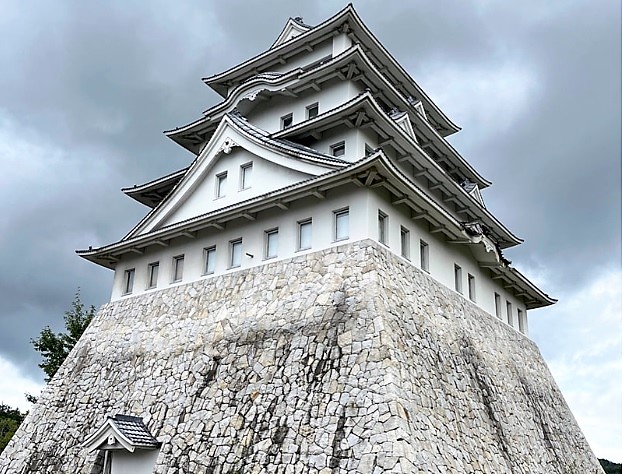
Aussies can buy an (almost) authentic Japanese castle for only about $100,000, it has been revealed recently on social media.

Century21 Japan is selling the 6-story castle (with a restaurant on the second floor) in Akabira, Hokkaido, at a price unimaginable to potential home buyers Down Under.
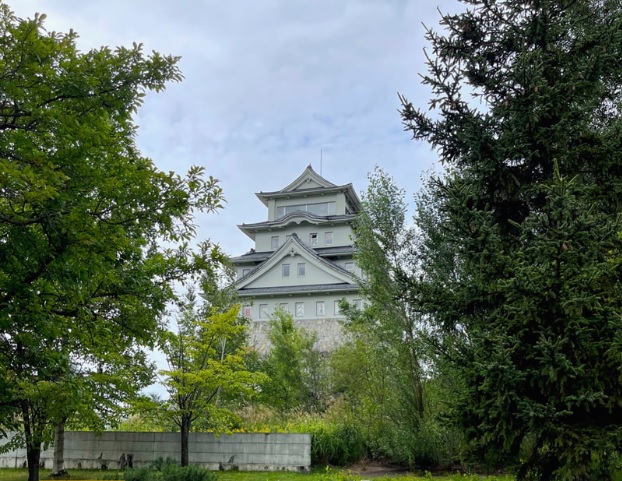
Of course, at that price, there’s bound to be a few catches, but perhaps not as many as some may think, especially considering it comes with a huge garden (over 5,000 m2), a working elevator, restaurant, more than 40 parking spaces and connection to sewage and water mains. Located in Hokkaido, Japan’s northernmost island and home to the cashed-up bogan paradise of Niseko, the castle is even not too far from Furano just 50 km away, so it even offers the prospect of a taste of Japow!
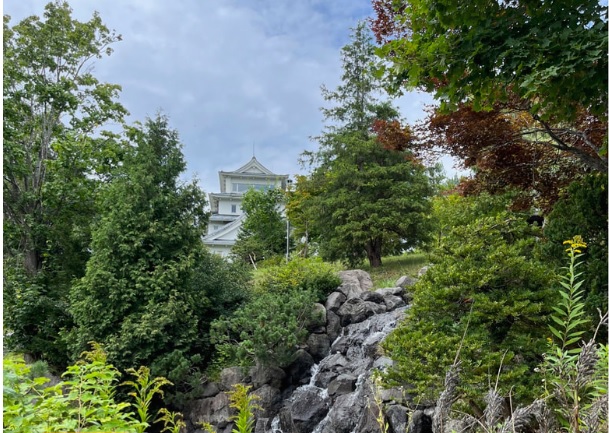
First of the catches is that you’re looking at an annual property tax of 1.2 million yen (About $12,000). And even the estate agent reckons it’d cost about $80,000 to replace missing tiles on the castle roof. And despite being authentic, it’s only real in the sense that it’s a castle that’s in Japan. It dates all the way back to that ancient age of 1991.
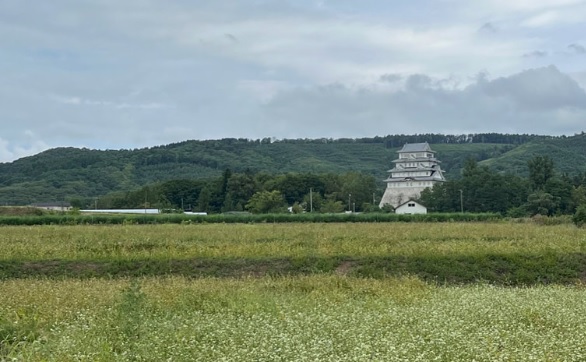
Still, for a driver, it’s not that far away, I guess. It’s just 95 km from Sapporo, Hokkaido’s prefectural capital, and 108 km from New Chitose Airport, a gateway to global skies. And there’s a Lawson convenience store almost right next-door.

The more I write about it, the better it’s starting to look….if only I could do some sort of deal to get rid of the property tax. Based on chats on Facebook and the like, the agent, Stephen Underwood, looks like a pretty decent bloke, too.

Cop A Gander At These Rippers Too...

  • | | |

    Why Did Suntory Choose Jacko For Its Ads?

    なぜサントリーはマーク・“ジャコ”・ジャクソンを起用したのか? In the 1980s, one of Australia’s most colourful sporting personalities unexpectedly found himself on Japanese television. AFL star Mark “Jacko” Jackson wasn’t a movie actor or musician, yet Suntory believed he had something special to offer Japanese audiences. Why? 1980年代、オーストラリアを代表する個性派スポーツ選手の一人、マーク・“ジャコ”・ジャクソンが日本のテレビCMに登場しました。俳優でも歌手でもない彼を、なぜサントリーは起用したのでしょうか。 Bigger Than Footy フットボールを超えた存在 In Australia, Mark “Jacko” Jackson was already famous. A talented Australian Rules footballer, he became equally well known for his humour, confidence and unmistakable personality. His catchphrase, “I’m an Individual”, made him one of Australia’s most recognisable media personalities. フットボールを超えた存在 オーストラリアでは、マーク・“ジャコ”・ジャクソンは人気の高い人物でした。 優れたオーストラリアン・フットボール選手であると同時に、ユーモアあふれる個性的なキャラクターでも知られていました。 「I’m an Individual(俺は俺だ)」という決めぜりふは、多くのオージーに親しまれました。 Japan Was Discovering Australia 日本がオーストラリアに注目していた時代 During the 1980s, Japan’s interest in Australia was growing rapidly. More Japanese families were travelling…

  • |

    Oops! Austrian textbook error sparks online calls for Japanese to boycott Aussie Beef

    Japan’s feisty online community briefly urged a boycott of Aussie Beef — arguably Australia’s best-known export to Japan — after an Austrian school textbook referred to the Sea of Japan as the “East Sea,” a Korean label aimed at helping it forget its past as a Japanese colony, according to a June 28 report from online Japanese news site J-Cast. Australia, which uses Sea of Japan in its school materials and official documents, had nothing to do with the textbook. Among the comments posted online were “That Australian mob are simple and will fall for anything,” “Why’s Australia calling it the East Sea if it’s not to their east?” and…

  • |

    Chance encounter caused by Melbourne rain makes Indigenous Australian art Big in Japan – and Oz art’s greatest-ever solo success

    Fancy guessing the most successful solo exhibition ever given by an Australian artist? Maybe, Sidney Nolan in New York? Tom Roberts in London, perhaps? What about Brett Whiteley in Paris? Nah. Here’s a hint: the artist was indigenous. Ah, well, in that case, it’d have to be Albert Namatjira, right? Nope. Wrong again. In fact, the late Emily Kame Kngwarreye holds the honor with wildly successful exhibitions in Tokyo and Osaka back in 2008. Over 120,000 visited the exhibtion, which featured over 200 works valued at more than $50 million. Crucial in the success of those exhibitions, as well as prior and subsequent triumphs by contemporary Indigenous Australian artists in…

  • | |

    How Did Noriko Nishimoto Help Thousands of Japanese Discover Australia?

    西本典子さんは、どのように何千人もの日本人とオーストラリアを結び付けたのか? Long before influencers and travel bloggers, one Japanese woman was quietly introducing Australia to generations of Japanese visitors. Through warmth, knowledge and tireless community work, Noriko Nishimoto became one of the unsung builders of Australia–Japan friendship. SNSも旅行インフルエンサーも存在しなかった時代、一人の日本人女性が静かにオーストラリアの魅力を日本へ伝えていました。西本典子さんは、長年にわたり多くの人々を結び付けた、知られざる日豪交流の立役者です。 A New Home 第二のふるさと Noriko Nishimoto did more than settle in Australia. She made it her mission to help Japanese visitors and residents feel welcome. Whether answering questions, sharing local knowledge or building friendships, she became a trusted bridge between two cultures. 第二のふるさと 西本典子さんは、オーストラリアで暮らすだけではありませんでした。 日本人が安心して生活し、旅を楽しめるよう支え続けました。 情報を伝え、人と人を結び、日豪をつなぐ架け橋となったのです。 Building Communities コミュニティを育てる International friendship rarely happens through official ceremonies. It grows through everyday acts of kindness. By helping newcomers find their feet, Nishimoto strengthened both…

  • |

    Japan’s Crucial Role in Turning “Mad Max” into a Global Aussie Icon

    Turning the clock back 40 years, Japan played a crucial role in giving Australia a leg-up toward becoming a player in the global movie industry. In late 1977, a couple of fledgling Australian filmmakers pooled their meager funds and shot a movie starring mostly unknown young actors and actual motorcycle gang members serving as extras. Almost two years later, Mad Max opened Australian theaters and became a steady, but controversial hit. The car action movie was immediately banned in New Zealand as some of its motorcycle gang violence resembled actual events in the market most closely resembling Australia’s. Australia’s movie industry was in the middle of a growing renaissance, backed…

  • |

    挑戦・防衛・勝利・完敗、豪のローズが日本で体験する

    1968年東京で世界バンタム級チャンピオンとなって、オーストラリア先住民初の世界チャンピオンリオネル・ローズが同都市で初防衛。相手が桜井孝雄だった。 Lionel Rose won his world bantamweight title in Tokyo in 1968 and defended it there later that same year against Takao Sakurai.