
Glorious Sunset in the Ancient Capital
A glorious sunset over the ancient Japanese capital of Nara.

A glorious sunset over the ancient Japanese capital of Nara.
A moving day allowed the tour riders to freshen legs ahead of the trip’s biggest climb, but that didn’t mean it was an easy day. Riders had a free morning in Matsuyama before assembling around midday to catch a bus to Tokushima. Activities engaged in during the morning included watching a festival, visiting Dogo Onsen hot spring and climbing up to Matsuyama Castle to check out the views of the city. The bus trip to Tokushima was largely uneventful and after about two hours, participants marched on to the Nankai ferry for the journey to Wakayama, leaving Shikoku in their wake. The ferry trip lasted about two hours and the…

1968年東京で世界バンタム級チャンピオンとなって、オーストラリア先住民初の世界チャンピオンリオネル・ローズが同都市で初防衛。相手が桜井孝雄だった。 Lionel Rose won his world bantamweight title in Tokyo in 1968 and defended it there later that same year against Takao Sakurai. しかし、この防衛戦の前に、伝説的な戦いがあった、、、
Thanks to my annual leave, and a message from a fine man committed to giving back to society, I got to spend Stage 9 of the Big Red Bike Tour visiting a video night to showcase the 500-km charity ride the Knights in White Lycra made in June. The Knights in White Lycra (KIWL) were formed in 2013 and are a group of volunteers that devote themselves to giving back to society and getting fit in the process. They donate the proceeds of heir activities to Mirai no Mori, an NPO devoted to underprivileged children. KIWL conducts a number of fund-raising events, but those that most attract my attention are…
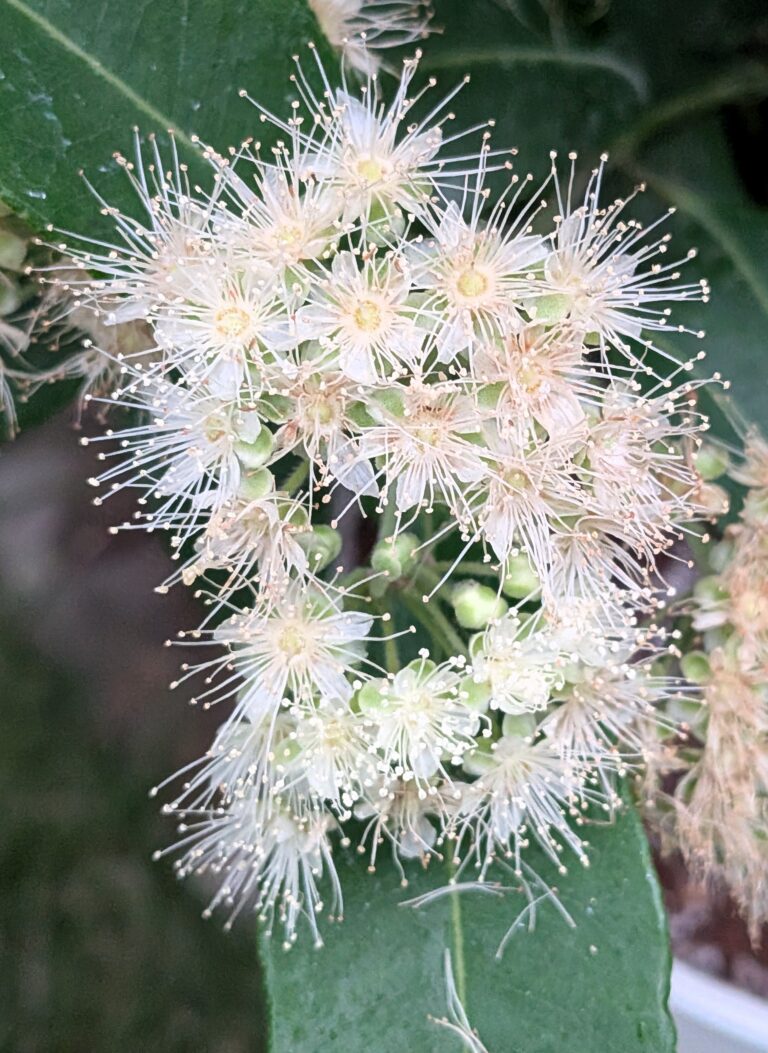
なぜ日本にはオーストラリアのユーカリがこんなに多いのか? Look around many Japanese parks, university campuses or botanical gardens and you’ll probably spot a gum tree. Most people walk past without a second thought. Yet these unmistakably Australian trees have quietly become part of Japan’s landscape. 日本の公園や大学、植物園を歩いていると、ユーカリの木を見かけることがあります。しかし、多くの人はそれがオーストラリア原産だとは気付きません。今では、ユーカリは日本の風景に静かに溶け込んでいます。 An Aussie Arrives in Japan オージーの木が日本へ Eucalypts are native almost exclusively to Australia. The first specimens arrived in Japan during the late 19th century, when the country was eagerly introducing plants from around the world for scientific study and forestry trials. Botanical gardens played an important role in testing which species could adapt to Japan’s climate. オージーの木が日本へ ユーカリは、ほぼオーストラリアだけに自生する樹木です。 19世紀後半、日本が世界中から植物を導入していた時代に、ユーカリも研究や試験植林のため持ち込まれました。 植物園は、日本の気候に合う種類を調べる重要な役割を果たしました。 More Than One Tree ユーカリは一種類ではない Many people think “gum tree” means…
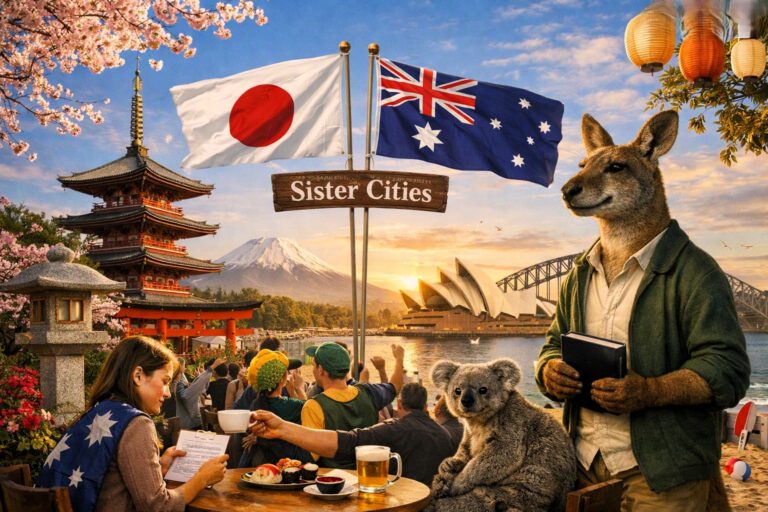
なぜ100を超えるオーストラリアの自治体が日本の姉妹都市を持っているのでしょうか? From school exchanges to sporting visits and lifelong friendships, sister-city relationships have quietly connected Australians and Japanese for decades. Today, more than 100 Australian communities have an official partnership with a Japanese city. 学校交流やスポーツ交流、市民同士の友情まで――姉妹都市交流は長年にわたり日豪の人々を結び続けてきました。現在、100を超えるオーストラリアの自治体が日本の都市と正式な姉妹都市関係を結んでいます。 Friendship begins between communities 友情は町と町から始まる National treaties are signed by governments, but sister-city relationships are built by ordinary people. Students, teachers, musicians, athletes and volunteers have travelled between Australia and Japan for decades, creating friendships that often last a lifetime. 国同士の条約は政府が結びますが、姉妹都市交流を支えているのは市民です。学生や教師、音楽家、スポーツ選手、ボランティアなど、多くの人々が長年にわたり日豪を行き来し、生涯続く友情を育んできました。 More than 100 partnerships Australia and Japan currently have 107 sister-city and sister-state relationships. Together they also support more than 550 sister-school partnerships, making this one of the world’s most extensive local-government exchange networks….
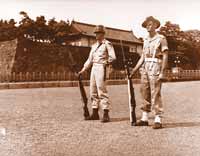
Not long after the end of World War II, John Collins would sit and eat sandwiches at Ground Zero in Hiroshima, then sift through the rubble left from the city subjected to the world’s first nuclear attack for items he thought could become historically valuable. 戦後間もなく、ジョン・コリンズ氏は、広島市の原爆中心地に座ってサンドウィッチを食べてがれきの中に歴史的に価値のあるものを探し回ったことがあった。 Collins was then a 19-year-old sapper with the Australian troops making up the bulk of the British Commonwealth Occupation Forces (BCOF) stationed in Japan from February 1946 to April 1952. 当時、コリンズ氏は、1946年2月から1952年4月の間で英国連邦進駐軍(BCOF)の約9割で構成したオーストラリア軍の一人だった。19歳だった。
We use cookies to improve your experience on our site. By using our site, you consent to cookies.
Websites store cookies to enhance functionality and personalise your experience. You can manage your preferences, but blocking some cookies may impact site performance and services.
Essential cookies enable basic functions and are necessary for the proper function of the website.
These cookies are needed for adding comments on this website.
Statistics cookies collect information anonymously. This information helps us understand how visitors use our website.
Google Analytics is a powerful tool that tracks and analyzes website traffic for informed marketing decisions.
Service URL: policies.google.com (opens in a new window)