Tets-J Doing a Dinkum Bewdy of a Job Spreading Indigenous Aussie Culture in Japan
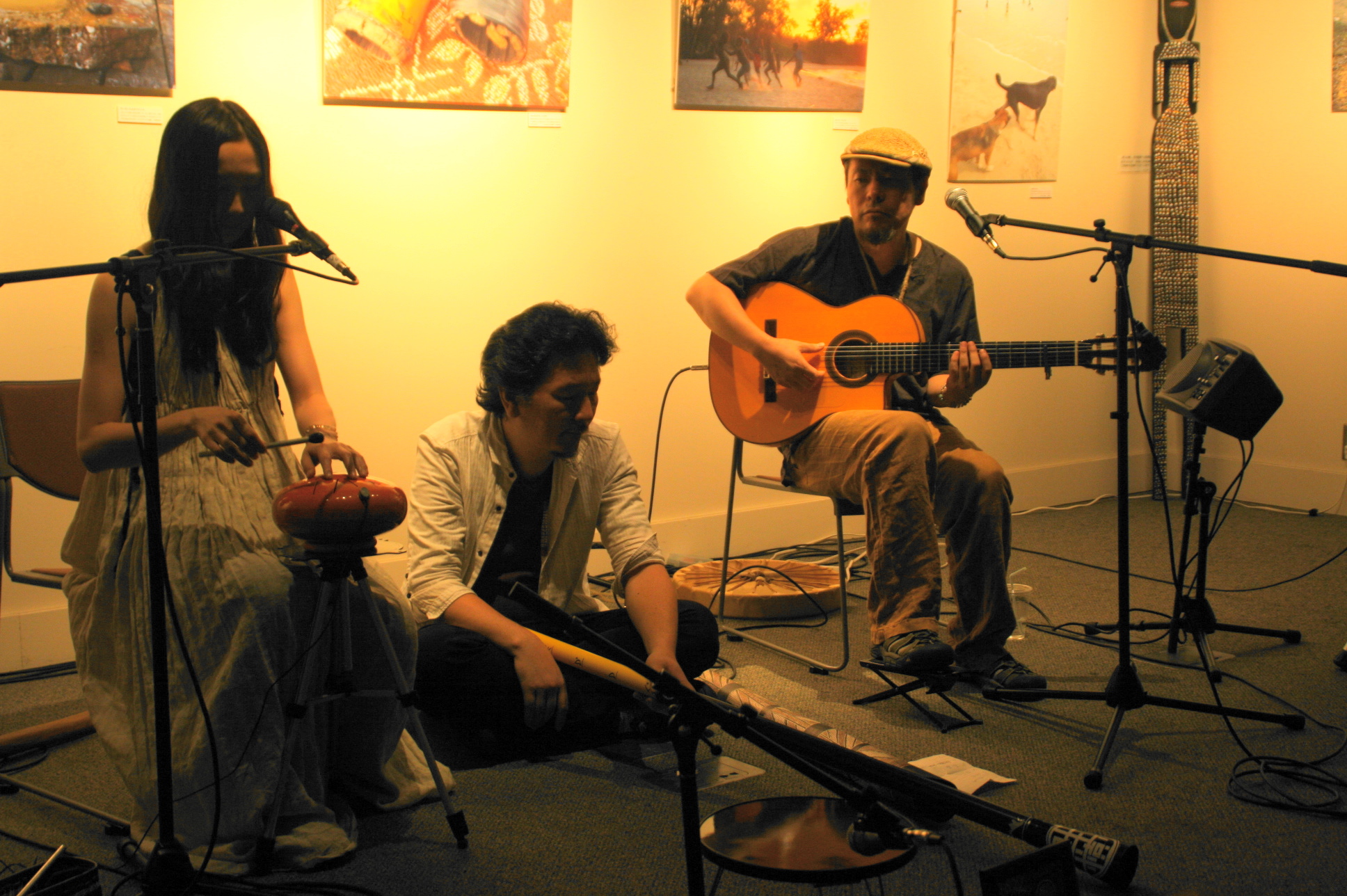
Tets-J (center) plays with Jibucon in Minami Machida on July 29, 2012
Tets-J is one of the great unsung heroes promoting Australian culture in Japan, and he’s even more remarkable for advancing indigenous Aussie culture.
Tets-J learned about the didgeridoo while staying in Melbourne, taught himself how to play, then returned to Australia’s Arnhem Land and studied under Djalu Gurruwiwi, a master didgeridoo player and member of the Yolngu people.
He has devoted his life to spreading indigenous Australian culture throughout Japan, which he does through his performances, his store, Dinkum Japan, classes, lectures, workshops and live performances he gives across the country, as he is currently doing on weekends in Tokyo.
Aboriginal Cultural Week Vol. 2, the collection of lectures, workshops and live performances, has two final sessions remaining on Aug. 4 and Aug. 5 at the mont-bell Grandberry Mall store in Machida, on the outskirts of Tokyo.
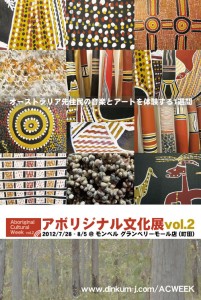
The workshops, which aim to give participants an opportunity to experience first-hand indigenous Australian culture and include the Aboriginal-influenced Tjangala Cafe in Ibaraki Prefecture among their supporters, include a gallery of photos and Aboriginal art, workshops on dot or bark paintings, boomerang or mini-didgeridoo decoration, a seminar on mainly Yolngu lifestyle, culture and customs and end with a night-time performance.
Items related to indigenous Australia are also on sale at the event. Performing at the concert on Aug. 4 with be didgeridoo players OMI and Tets-J, while the week will wrap up the following day with a show by Wago.jp (和豪.JP), a duo featuring tsugaru shamisen and didgeridoo.
As the week is directed toward a Japanese audience, events are conducted in Japanese. A small materials charge applies for some of the workshops, and advance reservations need to be made, while performers busk in their shows.
Tets-J is shown in the clip below, playing with Jibucon, in Minami Machida on July 29, 2012.

Tets-J Official Site (Japanese)
Dinkum Japan (Japanese)
Djalu Gurruwiwi Official Site
Jibucon Official Site (Japanese)
Cop A Gander At These Rippers Too...

  • | |

    A Symbol Of Japan That Fits Australia Like A Shoe

    Given the powerful pull of the surf culture in Australia, a link with Katsushika Hokusai‘s The Great Wave Off Kanagawa that immediately conveys an image of Japan was almost inevitable, but also symbolizes the strong ties between the two countries almost made for each other. Countless Australian companies, organizations, entrepreneurs, artists and others utilize or have utilized directly or derivatively the iconic Japanese work forming one of Hokusai’s Thirty-six Views of Mount Fuji. Even though the Great Wave is an instantly recognizable image that embodies the essence of Japanese spirit, particularly with the inclusion of Mount Fuji, Australia has long recognized the work as a shared connection between the countries….

  • | |

    豪キャブラリー: Fossick

    Fossickは古くから使われている独特なオージー英語であり、珍しく今でもよく使われている言葉だ。意味は、あっちこっちにものを探すことだ。由来はオーストラリアの19世紀での発展に大きく貢献したゴールド・ラッシュである。当時、金を探す人たちはfossickerと呼ばれ、その後金以外どんなものでも探すのがfossickするということになったようだが未だに鉱業に全く縁がない考えRooでも最初に思い浮かぶのが「金を探る」のが不思議でしょうがない。

  • サメ研究、撮影パイオニア豪州人ロン・テイラー氏が死亡

     約60年間に渡ってサメの生活を研究し、撮影したロン・テイラー氏がこの頃白血病によって亡くなられた、とオーストラリア・ジオグラフィック誌が報道した。  テイラー氏の活動がほとんど妻ヴァレリー氏と共に行なった。  夫妻が1953年「シャーク・ハンター」というサメに関するモノクロ映像を豪・米各テレビ局に売り、以降世界中にサメに対しての専門家として尊敬されるようになった。  一定の年齢であれば、どんなオーストラリア人でもロン&ヴァレリー・テイラー夫妻を知っているはずだ。  今でもサメに関する研究が比較的に珍しく、他の海洋生物同様それほど詳しく知識を集まっていない。しかし、サメに関する知識は恐らく世界中に同夫妻ほど蓄積した人がいないだろう。皮肉的にいずれも海洋生物学者ではなかったが、海洋生物学者に相談されるほうど経験によって蓄積してきた。  当然、学習的な世界だけでなく、エンターテインメントの世界にも大活躍したし、「ジョーズ」などサメに関する知識をあらゆる分野に伝わってきた。ちなみに、同夫妻の撮影がほとんどケージ無しで行なっていた。  下記のような迫力がある映像は同夫妻にとって朝飯前の仕事のようだった。 ヴァレリー・テイラー氏による「サメの真相と神話」 *サメを倒せる (真) *サメが泳ぐ犬に引き付けられる (真) *サメが流れている血に引き付けられる (可能だが未確定) *サメが横からしか噛めない (神話) *サメが教訓できる (真) *サメが後ろ向きで泳げる (神話) *サメが夕暮れに近い時間で攻撃する (可能だが未確定) *サメが淡水で生き残れない (神話) *サメが常に動かないと息が出来なくて死ぬ (神話) *サメ群れが縦社会 (真) 10 Myths About Sharks

  • |

    National Lamington Dayが豪州の国民的なケーキを祝う

     ラミントンというケーキはパヴロワと並びにオーストラリアの国民的なスイーツの一つであり、本日、7月21日は「National Lamington Day」として全国でラミントンを祝う日だ。  National Lamington Dayが初めて祝ったのは2006年で歴史が浅いがこのケーキは多くのオーストラリア人に古くから愛されているスイーツだ。  二つのスポンジケーキの間にラズべりージャムを塗り、周り全体にチョコレートアイシングをかけ、トッピングにココナツをまぶすという非常に簡単なケーキですが、近年にはカスタードクリームやホイップ・クリーム、各種ジャムなどいろいろな味で作られ、今まで以上に豊富な楽しみ方ができた。  簡単に作られるため、子供たちでもよく作る。ボーイ・スカウトやスポーツ・チームなどがラミントンを作って、屋台で販売し、得たお金をチャリティなどに寄付しボランティア活動との深い関わり合いがありオーストラリア社会にも重要な役割を果たしている。  もともと19世紀クィーンズランド州総督だったラミントン男爵に名づけられて、今では同州の公式象徴(オオヒキガエルとともに、、、)となっている。  作って見たら?(レシピが動画下にある) 豪キャブラリー: Pav ラミントン・レシピ 市販スポンジ・ケーキ(四角いが理想だが、何でも良い)2個 粉砂糖 4カップ ココア 1/3カップ バッタ 大さじ2個 牛乳 1/2カップ お湯 大さじ  細切りココナツ 3カップ 調理法 ココアと粉砂糖を大きめのバウルに混ぜて、ゆっくりと牛乳・バッター・お湯を付け加えて、クリームのような潤滑性があるまで弱火でゆっくりと温める。 スポンジ・ケーキを分けて、約5センチの四角形に切り、フォークなどを使って、全体がチョコレートに囲まれるようにチョコレートに入れる。チョコレートから取り出し、ココナツに入れて全体がカバーするように回す。チョコレートが固まるまでの数時間の間は、金網に置いて冷ます。

  • |

    No Wonder the Wallabies Were Wallies in RWC2019

    Australia’s rugby team, the Wallabies, were ignominiously dumped from the 2019 Rugby World Cup that Japan is currently hosting (and being lauded for both its organization skills and the rousing performance of its unfancied team). The Wallabies lost badly to England in a quarter final, mostly because they were not good enough as a team. But Kangaeroo.com has also discovered another reason for the Wallabies’ woes. Gorgeous Jindaiji Temple, which supported the Wallabies’ woeful World Cup, is situated in the Tokyo suburb of Chofu, location of the Aussies’ group stage loss against Wales on September 29 that effectively derailed their campaign on the field. Jindaiji had proudly displayed Wallabies jerseys…