Oops! Austrian textbook error sparks online calls for Japanese to boycott Aussie Beef
Japan’s feisty online community briefly urged a boycott of Aussie Beef — arguably Australia’s best-known export to Japan — after an Austrian school textbook referred to the Sea of Japan as the “East Sea,” a Korean label aimed at helping it forget its past as a Japanese colony, according to a June 28 report from online Japanese news site J-Cast.
Australia, which uses Sea of Japan in its school materials and official documents, had nothing to do with the textbook.
Among the comments posted online were “That Australian mob are simple and will fall for anything,” “Why’s Australia calling it the East Sea if it’s not to their east?” and “Is it OK to boycott Aussie Beef?”
The mix-up was apparently sparked by a Japanese tabloid newspaper headline using the character for Australia (豪) in a story about the Austrian textbook that, when referring to the body of water separating Japan and the Asian mainland, chose to use East Sea, the name Koreans have been lobbying persistently to replace the internationally recognized Sea of Japan.
Japan’s online community has a fierce anti-Korean streak and the news soon reportedly sparked demands to boycott Australian beef in Japan, even though Australia had nothing to do with the issue and steadfastly backs use of the Sea of Japan.
Nonetheless, anti-Australian sentiment is also strong within Japan’s online community due to its perceived anti-Japanese sentiment sparked by opposition to whaling, J-Cast said.
It’s not uncommon for confusion to arise between the names of Australia and Austria.
In this Olympic year, it’s worth noting that when Edwin Flack won gold medals in the first-ever modern Olympic Games in Athens in 1896, confused officials are said to have raised the flag of Austria (then still a middling-power European empire) and played the Austrian national anthem. (This story is probably apocryphal, but widely believed nonetheless).
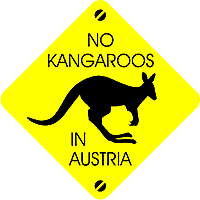
On the other hand, Austria has carved out a tourist souvenir niche for itself by creating a “No Kangaroos Here” range of souvenirs.


オーストリアが教科書に「東海」 ネットで反発、なぜか「オージービーフの不買運動」
(Japanese)
Official Aussie Beef site (Japanese)
Cop A Gander At These Rippers Too...

  • ファースト・オーストラリアンズ Episode 3 Part 4/5

    「ファースト・オーストラリアンズ」(英語)は、2008年作のドキュメンタリー。先住民の視野からオーストラリアの歴史を記録する。必見だ!  今日は3作目5部中4部目。 Related posts: ファースト・オーストラリアンズ Episode 3 Part 1/5 ファースト・オーストラリアンズ Episode 3 Part 2/5 ファースト・オーストラリアンズ Episode 2 Part 1/6

  • |

    豪キャブラリー: Rego

     日本の車検と同じようにオーストラリアでは車を運転すると必ず持参しなければならない資格の書類がある。それが車の登録済証と言うもの。車検検査ほど厳しくないが検査済みの証明でもある。オージー英語ではRegistration papers(登録済諸書類)の省略はregoと言う。   Related posts: The Strine Why Atorkin: Natchrule Strine 豪キャブラリー: Matey (動詞) 豪キャブラリー: Rednut 豪キャブラリー: G’day 豪キャブラリー: Arvo 豪キャブラリー: Chook 豪キャブラリー: Pav 豪キャブラリー: Snags

  • |

    「やばいリンガル」Feral (野生的)

     米・英語で普通に使っている言葉がオージー英語になるといきなり意味がまったく違ってくることがたまにある。Feralという言葉がそう。どのように違うのかは続けて読めば分かる。 Meanings of words can change suddenly when moving from English spoken in other countries to Strine. Let’s see what happens with feral. Related posts: Economic Organizations/経済団体 Striking a Light for Strine 「豪」にいれば「豪語」に従えって? 「やばいリンガル」Flat out 「やばいリンガル」 Flog (鞭打ちする) 「やばいリンガル」 Bag (バッグ) How do you say Skivvy in Japanese? 和風Wiggles Acrobatic Start to Relations まさにアクロバティックに始まった日豪関係 Mystery bag/不思議な袋(ソーセージ)

  • ファースト・オーストラリアンズ Episode 4 Part 2/5

    「ファースト・オーストラリアンズ」(英語)は、2008年作のドキュメンタリー。先住民の視野からオーストラリアの歴史を記録する。必見だ!  今日は4作目5部中2部目。 Related posts: ファースト・オーストラリアンズ Episode 2 Part 1/6 ファースト・オーストラリアンズ Episode 2 Part 2/6 ファースト・オーストラリアンズ Episode 2 Part 3/6

  • |

    A Breakout Performance Focusing on Australia’s Cowra

    Kaura no Hancho Kaigi (Honchos’ Meeting in Cowra) superbly dramatizes events surrounding a definitive incident in Australia-Japan relations. The play being performed by the Rinkogun theater group daily until March 24 (with two shows on March 19 and 21) centers on the Cowra Breakout, an attempted escape by about 550 Japanese prisoners of war being…

  • | | |

    「強盗殺人」なのにBig Thingsを含めて豪がNed Kellyを称える理由は何だ?

     今日の「Big Things」はオージー文化に深く関わるものと関するが、その背景が分からないと理解しがたいかもしれない。  ビクトリア州グレンロアンにある高さ6メートル幅2メートルのBig Ned Kellyは、オーストラリアで英雄とされているネッド・ケリーを称える。  「英雄だったら、すごい人だろう?」と思うだろう。  が、、、  、、、実は、強盗殺意人だ。  ま、石川五右衛門やロビン・フッドのように、裕福な人や権力を乱用する人に対して盗難をし、得たものを庶民に配ったりするような犯人だったらなんとなく分かるような気がするね。  しかし、、、そのような強盗者でもなかった。盗んだ物を自分・自分のギャングしか使わなかったし、殺した人が警官及びかつて親しいだった友人だった。  じゃ、政治的な理由でそのようになって人々のために戦った人物だったのか?  それも、ない。イギリス植民地時代だったので、抑圧されたアイルランド系の人だったに違いないが生きている間に特に政治的な動きをしたことはそれほどなかった。後になったそのように描こうとした人が時々出てくるが、本当は恐らく違う。  なんだかんだ言ってもネッド・ケリーはただの強盗殺人としか言うようがない。  なので、何でオーストラリアでそんなに尊敬されている?全国で英雄扱い、史上初長編映画の主体となり、以降ミック・ジャガーやヒース・レジャーなどがネッド・ケリー役を演じたり、実物が警官と正念場があったグレンロアンを中心に活動した地域が観光地となったり、研究の主体となったりしてネッド・ケリー神話が壮大となって、どんなオーストラリア人でもよく知っている。  でも、ただの強盗殺人だったら何でそんなに尊敬されているだろう?  不思議でしょうがないよね。 ネッド・ケリーが自作鎧で警察と銃撃戦を行い、その末で捕まえられ死刑となった。鎧が確かに格好良かったので、それだけで人々を魅了したかもしれない? それとも、多分、正解は豪州のヨーロッパ系歴史にあるかな?  そもそもイギリス人がオーストラリアを植民地化した理由は流刑地になるためだった。  ヨーロッパ系住民のほとんどが囚人だったので、反権威主義の人が比較的に多かったかもしれない。犯罪に対しての見方がじゃっかんゆるいところがあったかもしれない?  未だにまだその傾向が豪社会で見える部分がある。  豪史上最多数ノンフィクション本の作家は自称ヒットマンであるマーク・チョッパ・リードが執筆した。そして、今で豪テレビで実際に起きた犯罪や実際に起こした実在する犯人を題材とした圧倒的に支持されて最も人気番組がアンダベリー・シリーズである。  こういう豪社会の潜在的な反権威主義がネッド・ケリー神話の基礎となっているかもしれない。本当の理由は何か分からないが、奥が深いに違いない。  ちなみに、グレンロアンにはもう一つの「Big Things」がある。これはBig Cherryだ。それについてまた後日掲載する。  そして、もう一つのネッド・ケリー「Big Things」もある。それがクィーンズランド州にある。ネッド・ケリー自身が同州へ行くことはなかったのでなぜそこに作られたが、全国的の人気の象徴とも言えるだろう。その「Big Things」が同州のメリーバラという町にある。 ヒース・レジャーが主人公となった「ネッド・ケリー」2003年 ミック・ジャガーが主人公となった「ネッド・ケリー」1970年 The Story of the Kelly Gang 大きな地図で見る Related posts: 芸術が盛んな田園町飲屋屋上「偉大死んだ魚」 ちょっと変な動物カモ、、、ノハシ 海で下水を流すことに抗議するために制作されたBig Poo おもちゃ工場にあるBig Rocking Horse ウィンブルドン選手権優勝にぴったりのBig Tennis Racquet 豪最も小さな州での巨大タスマニア・デビル 皮肉たっぷりのBig Penguin あまり意味の無い大きないも