Kangaroo Cooking…Roo Meat: It’s Tasty if Ya Cook It!

Japanese have been legally eating kangaroo for longer than most Australians.
Kangaroo meat was imported to Japan and being served in Tokyo restaurants from 1988, five years before meat from the national symbol was legalized for consumption by Australians in all states other than South Australia, where kangaroo could be eaten legally from 1980. (Indigenous Australians had continued eating kangaroo, a traditional food, regardless of the ban.)
Despite the head start, kangaroo meat never really kicked on in Japan, despite its reputation for being a healthy, high-protein, low-fat alternative to beef or pork.
RooMeat was promoted in Japan as being a preferred choice of athletes and models, but the “stars” called upon to plug the meat were not household names. Moreover, the meat was promoted with the somewhat mysterious catch copy of “it’s tasty if you cook it.”
Kangaroo meat can still be purchased in Japan, probably most easily from The Meat Guy, purveyor of fine meats.
Kangaroo meat is also promoted as an environmentally friendly choice as kangaroos produce less methane than cattle.
Some people have also adopted kangatarianism, which is essentially a vegetarian diet that allows for the consumption of kangaroo meat.
Japan’s kangaroo business was also involved in the kangaroo industry, which focuses around the marsupial’s leather, which is regarded as the strongest source of leather for shoes and gloves.
K-Roo kangaroo meat promotions
Premium kangaroo meat promotions


Cop A Gander At These Rippers Too...

  • |

    豪キャブラリー:A Moreton Bay Bug’s No Insect

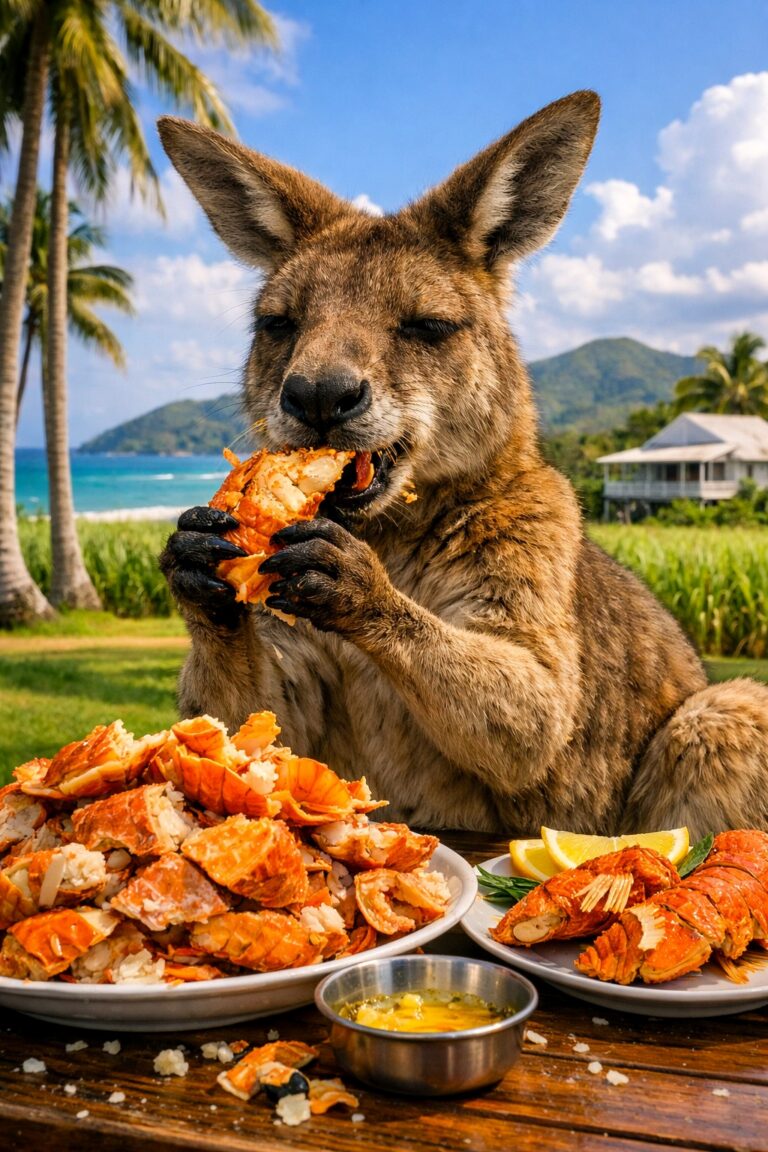
    モートン・ベイ・バッグは虫じゃないよ! 「モートンベイ・バグ」は、オーストラリア沿岸、特にクイーンズランド州周辺に生息するウチワエビの一種。 A Moreton Bay Bug may sound like an insect, but it’s actually one of Australia’s seafood delicacies. The Moreton Bay Bug is a species of slipper lobster found in Australian waters, particularly around Queensland. 名前こそちょっと変わっているが、虫ではなく、甘くて繊細な身が人気の甲殻類だ。 Despite its unusual name, it isn’t a bug at all. It’s a type of crustacean prized for its sweet, delicate meat. オーストラリアのシーフードレストランでは定番で、グリルやバーベキュー、バターとレモンを添えて出されることが多い。 The species takes its name from Moreton Bay near Brisbane in Queensland. 名前の由来は、クイーンズランド州ブリスベン近くのモートン湾。 Moreton Bay Bugs are popular in Australian seafood restaurants and are often grilled, barbecued, or served with butter and lemon. 日本の海鮮好きなら、味わいはロブスターと大ぶりのエビの中間、といったところだと感じるかもしれない。 Japanese seafood lovers might compare their rich flavour to a cross between lobster and large prawns. オーストラリアを訪れるなら、このモートンベイ・バグを味わうのは、現地の食文化を楽しむうまい方法だ。…

  • Layabout

    A layabout in Strine is someone who avoids work, except when striving hard to avoid doing anything useful. They work hard to avoid work. Layabouts are also referred to as idlers, good-for-nothings, and–most commonly–bludgers.  ストライン(オーストラリア英語)で layabout は「働くのを避けてばかりいる怠け者」のことです。役に立つことをしないためには一生懸命になるくせに、仕事そのものは全力で避けるタイプ。日本語で言う「ぐうたら」「ろくでなし」「役立たず」、そして一番よく使われる呼び名が bludger(ブラッジャー)です。

  • |

    日本語が大きく影響を与えた豪州言語

    オーストラリアでは、数少ないながら日本人・日系人の影響が昔からあった。19世紀からでも、日本人を中心に西オーストラリア州のブルーム市では、多くの日本人が真珠取りに活躍したのがある程度知られているが、そこで生まれた言語の貢献についてはそれほど知られていないかもしれない。

  • どんなオージーでも大好きな「ロリ」

     オージー英語で「ロリ」は「国民的な大好物」と言っていいほどの物であり、特に子供なら100パーセントが大好きだが、当然日本語での「ロリ」とは意味がかけ離れている。 Aussies have a great love for “lolly,” and that applies especially for probably 100% of kids, but naturally it’s a far cry from the “Loli” used in Japanese.

  • | |

    ちょっと変な動物カモ、、、ノハシ

     カモの口、ビーバーの尻尾、モグラの胴体、毒アリ爪、哺乳類なのに卵を産む。生理的に地球で最も不思議な動物の一つかもしれない。それがオーストラリアのカモノハシだ。そして、その不思議なカモノハシがタスマニア州ラトローブ町にオーストラリアの「Big Things」の一つとしてBig Platypusで称えられている。  カモノハシは、単孔目に所属し、既存している動物の中オーストラリアのカモノハシとハリモグラであるエキドナしか入っていない。なので、こんもユニークな動物を称えるBig Platypusは特に尊敬されるべきだろうと思うだろう。  が、実は、そうでもない。長さ5メートルのBig Platypusが元々1988年オーストラリアの200年周年を記念するパレードのために山車として作られた。そして、記念イベントなどが終了した後ラトローブ町にあるビール・ガーデンを経営するパブに売られて、そのビール・ガーデンの中やパブの屋根に飾りとして取り付けられた。ビールかけされっぱなしの3年間となったが、結局ラトローブ町に買収され町の現在の観光名物の位置づけが確保できた。 大きな地図で見る