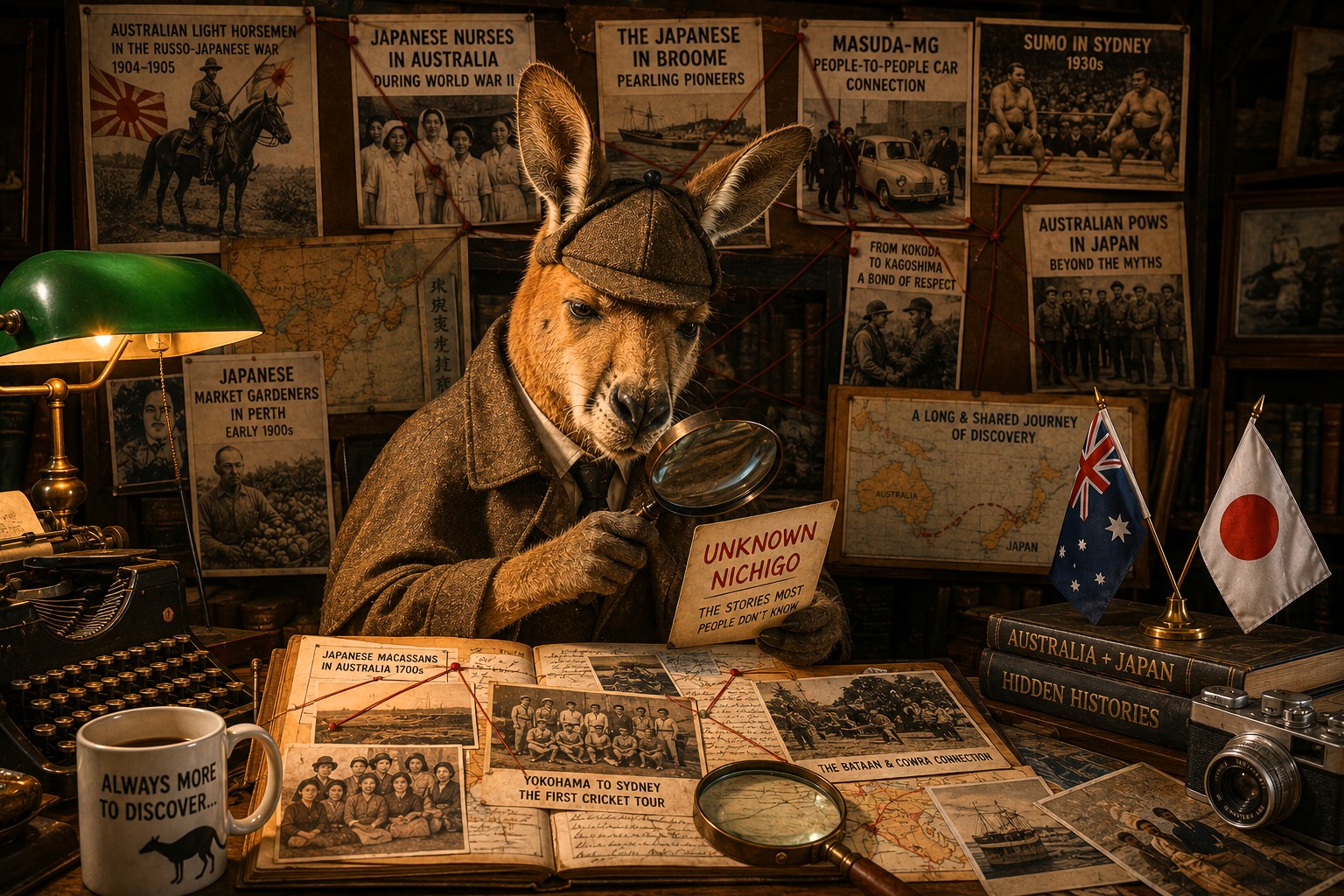
Unknown Nichigo

Learn more about the lesser-known aspects of the Japan-Australia relationship.
日本とオーストラリアの関係に隠れた、あまり知られていない側面についてもっと知ってみよう

  • |

    RIP to a Ripper Bloke, Bob Hawke

    Australia’s last man of the people to become prime minister is no longer. Robert James Lee “Bob” Hawke died earlier this week, just two days before his beloved Australian Labor Party is expected to re-take office in the May 18 federal election following six years of misrule by an incompetent Liberal–National Party coalition government. Hawke was 89. He was a popular prime minister whose time in office went from 1983 to 1991. He remains the longest-serving Labor prime minister in Australian history. Hawkey didn’t really have much to do with Japan during his time in office. Perhaps the closest project involving Japan was the disastrous Multifunction Polis proposal that sparked…

  • Abe First Japanese PM To Visit Japanese-Bombed Darwin

    In 1942, Japanese forces launched the only attacks on the Australian mainland, and Japanese Prime Minister Shinzo Abe became the first premier to visit Darwin, the most heavily damaged city bombed by the Japanese. Apart from Darwin, Japanese forces also attacked Sydney, Broome, Katherine, Wyndham, Exmouth, Port Headland and Townsville in the early stages of World War II. Abe’s grandfather, former Prime Minister Nobusuke Kishi, was arrested for war crimes, but released without conviction. Kishi was instrumental in re-establishing a strong postwar trade relationship between Australia and Japan. Shinzo Abe arrives in Darwin for first visit by Japanese leader

  • | | | |

    Kangaroo Cooking…Roo Meat: It’s Tasty if Ya Cook It!

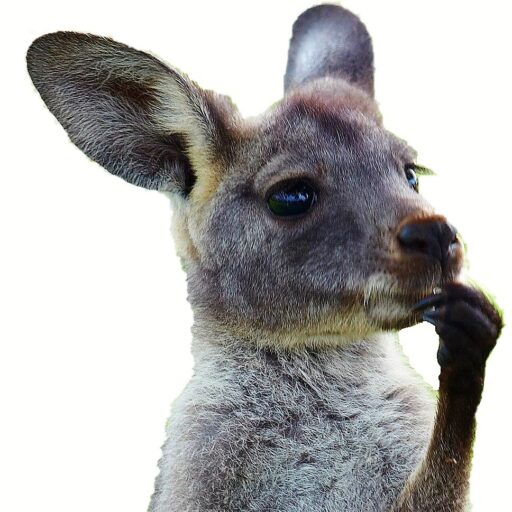
    Japanese have been legally eating kangaroo for longer than most Australians. Kangaroo meat was imported to Japan and being served in Tokyo restaurants from 1988, five years before meat from the national symbol was legalized for consumption by Australians in all states other than South Australia, where kangaroo could be eaten legally from 1980. (Indigenous Australians had continued eating kangaroo, a traditional food, regardless of the ban.) Despite the head start, kangaroo meat never really kicked on in Japan, despite its reputation for being a healthy, high-protein, low-fat alternative to beef or pork. RooMeat was promoted in Japan as being a preferred choice of athletes and models, but the “stars”…

  • |

    Straya, We’ll See Your Vegemite Chocolate and Raise You with Cough Lolly KitKats

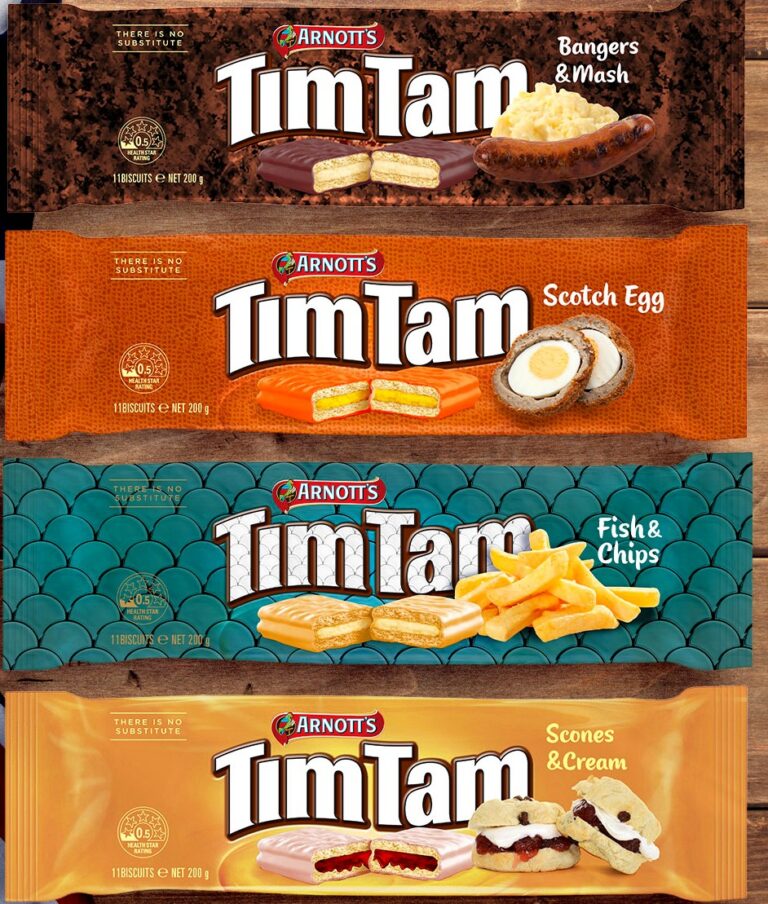
    Strewth! It doesn’t get much worse than the latest KitKat concoction to hit Japanese stores, which arguably takes the title of world’s worst chocolate unofficially claimed by Australia when it produced Vegemite chocolate back in June 2015. KitKat Nodoame flavor is now selling at Japanese retail outlets and is the latest in a line of Japanese KitKat flavors that extends well beyond 200. It should be noted, that <i>nodoame is the Japanese word for throat lozenge, and that’s exactly what’s been dished up in the latest KitKat…a throat lozenge flavored-chocolate!!!! For what it’s worth, throat lozenge-flavored KitKat tastes exactly as it sounds, with your average cough lolly covered by waffle…

  • |

    Tokyo’s Strange Socceroos

    Japan has a strange affinity when it comes to using Australian animals for its advertising. A number of major Japanese corporations use koalas and roos to plug their products and services. One with a difference is Hayashi Corporation, a construction company with a history of over 100 years and based in suburban Tokyo. Hayashi Corporation’s Fuchu branch office entrance is adorned with photos of a family of cartoon kangaroos decked out in soccer gear, just like Australia’s national football team, the Socceroos. Japan’s next opponent in World Cup qualifying is Australia, but there’s no connection. What is interesting to note, though, is that the kangaroos had been painted over until…

  • |

    Japan’s Crucial Role in Turning “Mad Max” into a Global Aussie Icon

    Turning the clock back 40 years, Japan played a crucial role in giving Australia a leg-up toward becoming a player in the global movie industry. In late 1977, a couple of fledgling Australian filmmakers pooled their meager funds and shot a movie starring mostly unknown young actors and actual motorcycle gang members serving as extras. Almost two years later, Mad Max opened Australian theaters and became a steady, but controversial hit. The car action movie was immediately banned in New Zealand as some of its motorcycle gang violence resembled actual events in the market most closely resembling Australia’s. Australia’s movie industry was in the middle of a growing renaissance, backed…

  • An Aussie Touch to a Landmark Japanese TV Show

    Australia provided an (admittedly unacknowledged) touch to Monster Prince (怪獣王子), one of Japan’s most popular TV shows in the late 1960s. Monster Prince told the story of Takeru Ibuki, a boy left stranded on a tropical island while a baby when his family is caught in a volcanic eruption and subsequently raised by dinosaurs living there. Together with his brontosaurus friend, Nessie, Takeru defends the island, and by extension the Earth, from invading aliens. And that’s where the Australian touch comes in…Takeru’s weapon of choice is a boomerang! The show ran for two series and was made by Nihon Tokusatsu Kabukikaisha. The role of Takeru was shared by twins, Yoshinori…

  • |

    Little Girl’s Story Opens Door to Aussie Animal Boom in Japan

    Back in the early ’80s Australia did not command a great deal of attention in Japan (to be honest, it still doesn’t command that great a presence to this day…) Things changed, however, with the launch of Lucy-May of the Southern Rainbow. Lucy-May of the Southern Rainbow was an anime by Nippon Animation that aired weekly from January 10 to December 26, 1982. The cartoon told the story of Lucy-May Popple and her family, who had emigrated from Yorkshire to live in Adelaide, Australia. The story was based on a book called Southern Rainbow by Australian author Phyllis Piddington. The anime would be translated into numerous languages and aired in…