日本語が大きく影響を与えた豪州言語

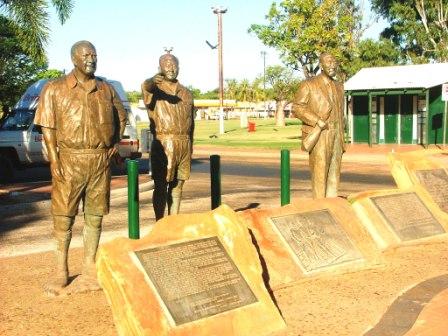
A memorial to Japanese luggers (pearl divers) in Broome, Western Australia
オーストラリアでは、数少ないながら日本人・日系人の影響が昔からあった。19世紀からでも、日本人を中心に西オーストラリア州のブルーム市では、多くの日本人が真珠取りに活躍したのがある程度知られているが、そこで生まれた言語の貢献についてはそれほど知られていないかもしれない。

Though there has never been a great Japanese presence in Australia in terms of numbers, the Japanese have still had an inlfuence on the land Down Under. It’s fairly well-known that even from the 19th century the Japanese were active mainly as pearl luggers in Broome, Western Australia, but what’s less talked about is how Japanese contributed to the creation of an Australian language.

 真珠取りが最も盛んとなった19世紀末から20世紀初期のころ、日本人をはじめアジア諸国からブルーム市にやってきた。

The Japanese were among people from many Asian coutnries to head to Broome to work in the pearl industry in its heyday from the late-19th to early 20th centuries.

 そして、現地の白人と先住民を合わせて使う言葉が多数あり、コミュニケーションができるづらい状態であった。

But with people from so many countries mixing with the European and Indigenous Australians, communication was very difficult.

 真珠取りの中では共通の言葉はオーストラリア全国で主に使われた英語ではなくて、そこで生まれたのがブルーム真珠取りピジン言語(Broome Pearling Lugger Pidgin)だった。

The common language among the various nationalities of those working within the pearl industry was Broome Pearling Lugger Pidgin.

 同言語は、英語・マレー語・先住民語を中心に名詞と動詞に構成され、日本語が助詞となった。同言語では質問を問うと、日本語と同じく「〇〇か?」と聞き出したらしい。

Broome Pearling Lugger Pidgin used mainly English, Malay and Indigenous Australian languages, but Japanese provided the particles. For instance, asking a question in Broome Pearling Lugger Pidgin involved ending a sentence with the particle “ka,” a trait it derived from the identical practice in the Japanese language.

 現在、ブルーム真珠取りピジン言語がほぼ死語となっているらしいが、真珠取りの先住民アジア系の後葉若者を中心にアイデンティティの象徴として使う場合もあると言う。

Broome Pearling Lugger Pidgin is now a dead language. However, the descendants of Asian-Australians who formed the backbone of the pearling industry in Broome now apparently use the pidgin at times as a symbol of their identity.

 日本・日本語・日本人が思わずな所にオーストラリアの歴史と文化に貢献しているよね。
Japan and the Japanese have contributed to Australian history and culture in unexpected ways.
Cop A Gander At These Rippers Too...

  • Layabout

    A layabout in Strine is someone who avoids work, except when striving hard to avoid doing anything useful. They work hard to avoid work. Layabouts are also referred to as idlers, good-for-nothings, and–most commonly–bludgers.  ストライン(オーストラリア英語)で layabout は「働くのを避けてばかりいる怠け者」のことです。役に立つことをしないためには一生懸命になるくせに、仕事そのものは全力で避けるタイプ。日本語で言う「ぐうたら」「ろくでなし」「役立たず」、そして一番よく使われる呼び名が bludger(ブラッジャー)です。

  • Aussies Exposed to Radiation in Japan After Hiroshima

    Not long after the end of World War II, John Collins would sit and eat sandwiches at Ground Zero in Hiroshima, then sift through the rubble left from the city subjected to the world’s first nuclear attack for items he thought could become historically valuable. 戦後間もなく、ジョン・コリンズ氏は、広島市の原爆中心地に座ってサンドウィッチを食べてがれきの中に歴史的に価値のあるものを探し回ったことがあった。 Collins was then a 19-year-old sapper with the Australian troops making up the bulk of the British Commonwealth Occupation Forces (BCOF) stationed in Japan from February 1946 to April 1952. 当時、コリンズ氏は、1946年2月から1952年4月の間で英国連邦進駐軍(BCOF)の約9割で構成したオーストラリア軍の一人だった。19歳だった。

  • | |

    なでしこジャパンvs豪州マティルダズ戦

     日本の世界チャンピオンなでしこジャパンが11日東京の国立競技場でオーストラリア代表「マティルダズ」とロンドン五輪壮行試合で対戦する。  試合が午後5時でキックオフする。なでしこジャパンの方が圧倒的に強いなので、オリンピックの練習になるかどうかが疑問だが、日豪サッカー伝統のもうひとつの例となれればいいな。  フジテレビが試合を生中継する。  日本国外にいれば、オーストラリア放送局(ABC)のウェブサイトがストリーミングで中継する(英語解説)。  ちなみに、なでしこジャパンの「なでしこ」は日本の花の一つとして名づけられたが良く知られているが、マティルダズの由来は分かる?マティルダ(matilda)は、英語で「雌カンガルー」を示す言葉だ。(雄はブーマーというが、豪代表サッカーチームはサッカールーズといい、ブーマーが全豪バスケ代表に使われている)。

  • | |

    豪で最も雨が降る町は巨大ゴールデン・ゴムブーツ賞を(勝手に)受賞

     ゴールデン・ゴムブーツ賞はオーストラリア最北部にあるタリー、イニスフェールとビビンダという三つの小さな町が競争する賞であり、最も多く雨が降る町が受賞される、、、  、、、が、ビビンダが約40年間に渡りほぼ毎年降雨がオーストラリア一にも関わらず、タリーの行動力が良く勝手に雨に関する「Big Things」でありゴールデン・ゴムブーツを2003年に作成し、今同町の立派な観光スポットとなっている。  ゴールデン・ゴムブーツの7.9メートルもある高さは同町の年間降雨記録だった1950年の意味も示す。なお、同地域が絶滅危機にあるイエアメガエルの繁殖地でもあり、その存在をゴールデン・ゴムブーツにも認められている。  毎年、タリーがゴールデン・ゴムブーツフェスティバルも開催する。 View Larger Map

  • Why Do Aussies Say “Fair Enough”?

    なぜオージーは「Fair enough」と言うの? “Fair enough.” You’ll hear Australians say it dozens of times a day. Someone explains why they’re late. “Missed the train.” “Fair enough.” Someone says they’re too tired to go out. “Fair enough.” It isn’t enthusiastic agreement. It isn’t even saying the other person is right. It’s simply a friendly way of saying: “I understand.”“That seems reasonable.” Australians like avoiding unnecessary arguments. Rather than debating every little point, “fair enough” acknowledges the other person’s explanation and lets the conversation move on. Unlike the more Australian expression fair dinkum, which questions honesty or sincerity, fair enough simply accepts what has been said. Vocabulary ExpressionFair enough Pronunciation/feə(r) ɪˈnʌf/ MeaningI understand. That…