
Ironically, my arrival in Japan coincided with the release of an aptly named snack, nuts-in, from Glico.

I’ve had some kooky times in Japan since that fateful day when I got to New Tokyo International Airport in Narita precisely 38 years ago.

I was only planning to stay for a short while and had a short-term visa. Plans changed. Not for the first time.

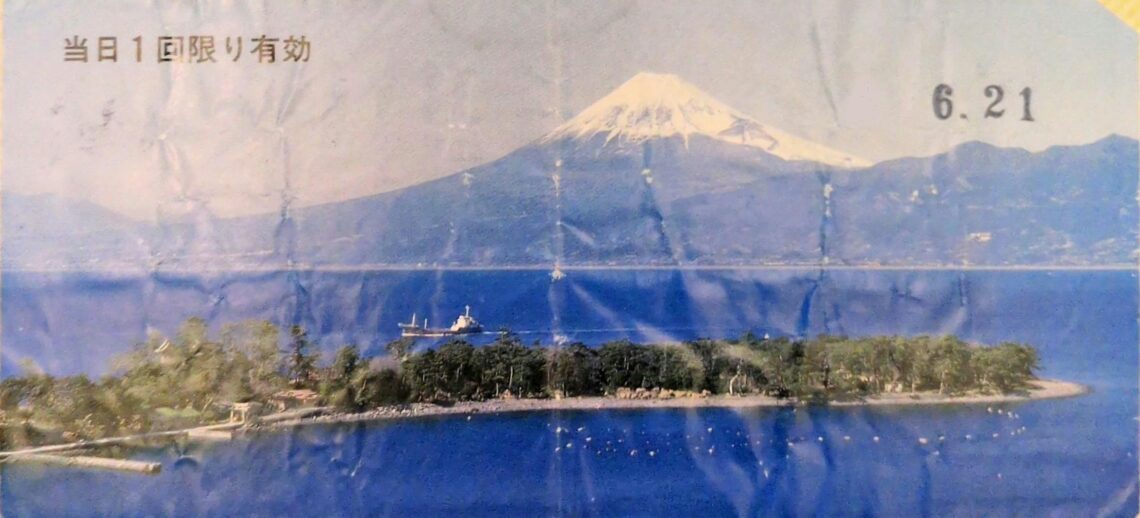
Hoarding has been a lifelong habit. I recently found lots of old tickets and trinkets I had squirreled away in my early days in Japan.


Lots of them I can’t use now because they’re no longer socially acceptable.


My first-day memories are of the brown, barren sides of the expressway while taking the bus into central Tokyo as Narita, which had only replaced Haneda as Tokyo’s main gateway to the world a decade earlier, did not have a train service at that time.

I’d imagined Tokyo to have filthy air, as I remembered a photo in a school textbook where a huge crowd walked the streets of a Japanese city and everyone was wearing a surgical mask. My recollection was that the textbook said people wore the masks because of the smog, and that people in Japan would often need to buy shots of oxygen sold in vending machines on the streets. I reckon now this is probably my mind playing tricks on me. But I have never forgotten my memory of my first day in Tokyo when I was wonderfully surprised by the crisp, clean air and bright, sunny skies.


I also remember sitting across the road from Tokyo Station Yaesu Exit, waiting for a friend to come and collect me. I was surprised by how sharply people dressed, though I had little idea of fashion at the time.

Eventually, I would get on the Yamanote Line train and head to Otsuka. I needed to ask people for directions, giving them a piece of paper with the address on it and hoping they could help me get there. Many people on the train gathered together to gently guide me toward my destination. It was my first experience of omotenashi, hospitality. Though I didn’t appreciate it at the time, I can recognize it now and am grateful that I can still get to recall the kindness and generosity that complete strangers showed me. It has been a hallmark of my experience in Japan, and an enormous reason why I’ve stayed here.

It was interesting to find a social media post the other day about the top 10 things people found about the Showa era, the name for the reign of Emperor Hirohito from 1925 to 1989.

Four of the 10 involved smoking: No. 1, on the train; No. 4, in the plane; No. 5 in hospital waiting rooms; and No. 7, in movie theaters. As a smoker at the time, I didn’t notice so much as welcome the openness toward lighting up, which was becoming increasingly difficult to do in my native Australia where the anti-smoking lobby was gaining traction.

No. 2, the 360 yen to 1 U.S. dollar exchange rate (as existed from 1949 to 1971) was meaningless for me, but swapping 1 Australian dollar for roughly 100 yen was the rate then and remains basically so now, too. (What you could buy with an Australian dollar then was significantly more than you can in 2025.)

No. 3, flushing effluent directly onto the train tracks on railroad journeys was something I never cottoned on to, either. But I do remember loving how everybody started tucking into food and quaffing beers as soon as a long train ride began. And being aghast at the filthy state of carriages when journeys ended and how the normally fastidiously clean Japanese seemed to have an entirely different rule book when it came to traveling on trains. This habit has completely disappeared. So, mostly, has been people peeing on the street, which was common when I got here, but something I only ever see rarely now, and certainly never in broad daylight on bustling city streets as I would see in 1988.

Spittoons, No. 6 on the list, were something I recall seeing, but don’t remember them being common. I still see people spitting on the streets now. I guess I would have found it repulsive when I got here, but I am inured to it now and wouldn’t have even noticed or thought about it had this item not appeared on the list.

Another of the top 10 Showa behaviors that didn’t register with me was school children being forbidden from re-hydrating during club activities. Guts and stoicism were widely held virtues in Japan at the time, so it’s not unsurprising, but not something I would regard as symbolic of the times as I did not attend school here.

No. 9, the number of naked women broadcast on prime time TV, was a little different to how I recall things. I certainly don’t forget the nudity, but I remember it being late night, especially on shows like 11 P M. Mind you, considering how late people generally worked in those days, that timeslot could, indeed, be prime time rather than the 7 p.m.-9 p.m. image I have it being. I also remember video stores being at least half filled with porn flicks, phone booths covered in stickers for sex services and photos of scantily clad women being ubiquitous.

Finally, rounding out the top 10 Showa era events now considered unthinkable was the absence of the consumption tax. I only remember watching a news story about the Japan Mint making more 1 yen coins to accommodate their expected growing need with the introduction of the then 3% tax in April 1989. I do remember having a lighter coin purse, and the anger people felt at the levy following its introduction.

My first year in Japan would be the final full year of the Showa era, and times would change drastically once again.